


 I won't even attempt to write a proper review as I've read this a while ago, but I did want to write down some impressions, because Shannon Hale is quickly becoming one of my newest favourite writers. I can't just mention this one briefly.
Returning to Bayern was like revisiting some old friends. True, I've only read The Goose Girl recently, so it hasn't been that long ago, but it was still comforting. The story though, wasn't. Also, it was a little hard to get into it at first. It didn't have the familiar beginning of a fairy tale like The Goose Girl had. It left Ani aside, to focus on Enna, who was one of the best secondary characters in the first book, but somehow it took a while to warm up to the story.
The writing was always enchanting, though, and I knew I was gonna fall in love with the story soon enough. Enna is easy to love, just like Ani (or Isi as she calls her) but they are different. Ani had to grow from being too shy and awkward to be confident and brave. Enna's journey is different. She's already confident enough, being from the Forest and all, but she's very impulsive, strong-minded and proud. All great traits which make her a beautiful character, but which also lead her to make some big mistakes.
My favourite part was the second half, and if you haven't read it, skip this paragraph as it's hard to talk about it without some spoilers...
We come to realise, as hinted by Ani/Isi, that Enna's gift is a dangerous one, even more than expected, and that it won't be easy to get rid of it. Just like a drug, it starts to take over Enna's life from the inside and there seems to be no solution. The ending was absolutely beautiful. It showed the strong friendship bond that exists between the two young women, and it reminds us that the only way nature work is by maintaining its balance. You can learn its language but it can literally eats you up if you don't understand it as a whole. Loved it.
(end of spoilers)
My favourite fantasy books never take magic lightly. They show there's always consequences, laws and balances to learn before you can master it. That's one of the reasons why I will always refer to Ursula K. Le Guin and her Eearthsea series as some of the best fantasy ever written.
I love the Harry Potter's books because they're entertaining and cleverly plotted, but their careless use of magic will always slightly annoy me.
I'm happy to say Shannon Hale's works falls into the "best" category. At least her fantasy books, which are the only ones I've read so far.
I'm really glad there's another one to read in this series, River Secret, which I know nothing about. Another chance to get that cosy warm feeling of revisiting a beloved world and characters.
other reviews:
Things mean a lot
Nothing of Importance
Melody's Reading Corner
Rhinoa's Ramblings
Words by Annie
The Written World
Always dreaming
Please let me know if you've written about it too.
Saturday, 5 June 2010
Enna Burning - Shannon Hale


Monday, 12 April 2010
What I've been reading
Not much really. Haven't been in the best form. Life isn't going exactly like I wanted, and that has affected my reading habits big time. As usual, when I feel down, books are not what I look for. I just can't concentrate long enough. I need mindless jobs like knitting, or cleaning the house. Or even movies, although they can lead to even more tears so I'm avoiding them for now as well.
But anyway, I hope everyone who's participated in the Dewey's Read-a-thon last weekend has had a wonderful time. I know I did when I took part last year. Maybe I'll be in better form in October.
So, what I'd like to talk about now is the two books I've read recently.
One is Piggy Monk Square by Grace Joliffe
As usual with the best books I've read, this is not just about the story. There's much more going for it. There's Sparra's parents who are struggling to hold together their marriage although they love each other. There's the witchy mad auntie Mo who likes to stir up trouble, and Sparra's mother's cool best friend Josie who takes care of Sparra when her parents need to sort things out.
Then there's school. Where beating and abusing the kids for being late or giving the wrong answers is still acceptable. Especially in a working class area like where Sparra lives, in which children's rights are not a priority that concerns the authorities.
Piggy Monk Square reminded me a lot of Paddy Clarke Ah Ah Ah by Roddy Doyle, in a good way. It enters the mind of a 9-year-old child perfectly, showing us what the world looks like at that age: there's the monsters, which can take the form of coppers with handcuffs, or of imaginary psycho-killers, or of school principles with anger-management problems. There's the delights of sudden trips to the beach, or of getting tons of your favourite sweets with the change in the shop. And then there's the adult world, which can be so confusing and complicated. The coppers who are supposed to protect you, are abusive and scary and your parents who are only supposed to be together and love you, are splitting up and there's nothing you can do about it.
The book also does a good job in giving a feel of the time. Of what it meant to be a working class family in the 70's in Liverpool. And more importantly, it is written in this deceptively simple way which is so easy to fall in love with. It's a shame is not more well-known, it deserves to be read.
The other book I've read (finally!) is The Goose Girl by Shannon Hale.
I can't imagine anyone not liking this book. It's just one of those which are just too good to find something that can be said against them. I for one wasn't familiar with the original fairy tale, so I also had the unknown factor working on my favour. But what really got me was the writing. So beautiful, and original, and at the same time so perfectly in tune with the fairy-tale atmosphere. Shannon Hale uses the original story as a canvas to paint her own imagined world for princess Anidori. The storyline is something like a guide around which the author as let her imagination flow wonderfully.
I was drawn into it since the beginning. The writing won me over immediately, but then it was the characters which I longed to return to. Ani's journey is not only physical. She leaves her kingdom as a frighten child, and she becomes a confident, smart and brave young woman by the end of the book. She's just the perfect heroine. And then there's all the minor characters which make the book so special. I'm talking about the Forest born, Enna, and Finn, and Gilsa, and all of them really. I almost didn't want Ani to leave her geese and achieve her destiny. I loved the part where she slowly becomes a part of that community the most.
I'm sorry if I'm gushing about it without even an hint of an introduction to the story and the characters. I sort of assumed everyone else has read it except me, which is of course not true. But if you haven't by this stage, I think you should definitely go and read it, and after that, my review will make more sense to you, that's all I can say.
Now I'm in the middle of its sequel, Enna Burning, which features one of my favourite characters, so I'm expecting a lot from it. I don't think it'll disappoint.
Monday, 22 March 2010
Once Upon a Time IV
 This is the first challenge I officially join this year, and I've been really looking forward to it.
I'm not reading as much these days as I used to, but I'll try my best to do Quest the Second, which means reading a book for each category: Fantasy, Fairy Tales, Folklore and Mythology.
My pool of possibilities is not very exciting as they are books I've been listing more than once and never actually read them. Let's see how I get on this on this time.
Fantasy: The Amulet of Samarkand by Jonathan Stroud. (This one has been on my shelf for aaages, it's unbelievable).
A Wizard of Earthsea by Ursula K. Le Guin (A reread, of sorts. I have read this three times in the Italian translation, but never in English).
Fairy Tales: The Goose Girl by Shannon Hale. (I promise I'll read it this time!)
The Ice Queen by Alice Hoffman
The Bloody Chamber by Angela Carter (again, yes).
Folklore: Wonder tales of Ancient Wales
The Dreaming place by Charles de Lint.
Mythology: The Penelopiad by Margaret Atwood
That's it. I can't wait to start reading them!
Thursday, 25 June 2009
The Absolute Sandman vol. 1 - Neil Gaiman
 Thanks to my awesome library, I've been able to finally read this first volume of The Absolute Sandman. A comic series that's almost a legend, a cult among those in the know.
I had read some individual issues found on secondhand stalls, and also the beautiful novella The Dream Hunters.
But this is the real deal, where everything begins. And I loved it.
There were three major narrative arches:
- "Preludes and Nocturnes"
- "The Doll's House"
- "Dream Country"
If I had to choose a favourite, it would be "The Doll's House", although I loved every single story in its own right.
It wasn't anything I expected, primarily because it was so eclectic.
Sandman for one, is ever-changing. At the beginning he appears trapped in a human-conjured prison, and it takes him years to free himself. When eventually he manages to break free, he finds that his dreamworld has changed, that Nature has created other Sandmen to fill the gap left, and that he has to fight to regain his absolute power.
It's not what I expected from Dream. In my mind he was somewhat intimidating. Unreadable. Even invincible. He's an Immortal, after all. Lord of the Dreams. While here, at the very beginning, he's weak and powerless. It takes time to track down his tools - the pouch, the helmet, the ruby - and even after he's done, he feels empty, as if after achieving his goals he doesn't have anything left to do.
It wasn't something I had expected, but it was fascinating.
Also, I didn't think it would be a horror comic. I thought it would lean more on the fantasy side. But some stories are definitely scarier and gorier than what I thought they would be. Take "24 hours" for example. Or "Collectors". These stories, and their atmospheres reminded me a lot of an Italian comic series I used to read as a tween/teenager and which is still printed, called Dylan Dog. Dark Horse apparently has published some issues in English. If you can get hold of them, I highly recommend them, by the way.
As I was saying, one of its most striking feature was its diversity. Because if some stories are horror, some others were completely different. "Tales in the Sand" is a version of the myth of Sandman seen through an African perspective. "Men of good fortune" is a story of a man in the 14th century, who doesn't believe in death, and he's granted the gift of immortality, as a sort of game between Dream and Death. Then "A dream of a thousand cats" is a story showing us cats' view of the world, which is not pleasant nor cute.
There was so much into these stories, I find it hard to review it without failing to mention some great things about them. What I can say is that for a week or two, this volume sat by my nightstand, granting me one bedtime story, each night. I figured it was fitting for a comic all about dreams:) And it was a moment I looked forward to.(Although I wouldn't recommend it at night-time to the faint-hearted. It was, after all, a horror comic, at times!)
About the art...at first I wasn't too impressed . The stories made up for it, though.
Then with "The Doll's House" it really takes off. Some stuff was wonderful, especially the visualisation of people's dreams. I loved them.
Also, of course I have to mention all the fantastic extra material which would make any fan drool: the initial original Sandman proposal, the provisional sketches, the characters outline, and then the surprisingly-funny-to-read script for "A midsummer Night's Dream".
It pains me to bring this back to the library, but I have to let other people enjoy it too.
Thankfully, I have volume 2 ready to go:)
other bloggers' reviews:
Firefly
Stuff as dreams are made on (Preludes and Nocturnes)
Andi of Tripping Towards Lucidity (Preludes and Nocturnes)
Chain Letters (Doll's House)
Dewey (Preludes and Nocturnes)
Debi (Preludes and Nocturnes)
Convinced? Buy it!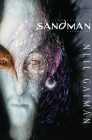
Shop Indie Bookstores
Monday, 22 June 2009
LGBT Challenge - Once Upon a Time III Challenge wrap up
 I had promise to myself not to join anymore challenges, because there is not much point when I don't actually read the books meant for that challenge. Even without lists! But since there's no challenge police, I'll join anyway! I can't resist this one.
It's hosted by Amanda at The Zen Leaf, and it requires the reading of 6 books in 6 months, all LGBT related, starting July 1 and ending December 31.
Incidentally, I'm already reading Baby Be-bob by Francesca Lia Block so the first book is sorted!
What else could I read?
I'm thinking:
Carol by Patricia Highsmith (The first lesbian novel with a happy ending, or so I'm told)
Beebo Brinker by Ann Bannon (lesbian pulp fiction of the 1950's)
Middlesex by Jeffrey Eugenides (the T is for Transgender, after all)
I'm not myself these days by Josh Kilmer-Purcell (about the life of a drag queen)
My tender matador by Pedro Lemebel (which has been waiting for 3 years now, as it's also about a transgender woman)
Also I should probably try to read Oranges are not the only fruit by Jeanette Wintersone again...
These are already at home...don't let me start with whatever I could get in the library because it's a road full of perils, we all know it ends in me wanting to read too many books as humanly possible.
ps: Here we say LGBT instead of GLBT. I'm used to it, and also I like it more ;)
Now for the Once upon a time III...er...
...I probably was in the mood for more realistic fiction than usual lately, because I managed to read 2 books only, out of the original 4:
-The Poison Throne by Celine Kiernan (fantasy)
-The Absolute Sandman vol 1. by Neil Gaiman (I decided to consider it mythology although it could fit in basically all four genres. But I thought The Sandman is a mythological figure, and these comics are a reinterpretation. Also there are many other mythical references in it).
I read some Charles de Lint stories for the Short Stories Weekend, but I reviewed only one, from Tapping the Dream Tree. Still have one to go, to finish the collection.
Speaking of Challenges, I think this year is the last for me. I know I haven't joined too many, but they're a lot for me and I feel constricted. Next time round I will stick to a VERY limited selection of these torture devises. I think they are fun only when they are the exception to my reading routine, not the norm.
Thursday, 11 June 2009
The Poison Throne - Celine Kiernan
 Set in a fantastical medieval Europe, The Poison Throne tells the story of Wynter, a 15-year-old qualified apprentice who, at the beginning of the book, has just returned with her sick father, the Lord Protector Lorcan, to the court of King Jonathon, after years spent in the Northlands training. She remembers the court as a joyful place, where she grew up playing with the king's two sons, Alberon and Razi,whom she considers her brothers. But now everything has changed. The once civilised, illuminated realm is oppressed by the King's brutal inquisition. Cats, once revered and cared for, are being persecuted, accused of spreading malicious rumors throughout the court and no one speaks to them anymore. Ghosts have been declared officially non-existing.
And gibbets have been reintroduced.
The happy times Wynter hoped to come back to have been replaced by fear and conspiracies, suspicions and tortures. But why? What has led king Jonathon to change his ways so dramatically?
Wynter is desperate to find answers. Especially because the lives of her beloved brothers might be in danger. Alberon, the legitimate son, is missing, while Razi, the bastard son, is being forced to take his place as the heir to the throne.
This story is not your usual fantasy adventure for teenagers. And maybe that's why it took me a little longer to get into it. It's a story about intrigue at court, yes, but at its core it's a story about relationships, about the strong bond that can exist between friends, family or lovers. It's real, and it's intense, but in a world ruled by protocol and politics, personal affections can become obstacles, or even powerful tools, depending who is using them.
In this first chapter of the Moorhawke trilogy, nothing is revealed easily. The reality of what is happening is uncovered little by little, and it gets increasingly engrossing by the page.
At first I wasn't particularly drawn to the main character, Wynter. I didn't like how she judged Razi's friend Christopher, so quickly and superficially, as soon as she met him. But as the story unravels, and we get to know her more, she gains more credit for being a strong, confident young woman, who's mature for her age, skilled in the art of etiquette and court's discipline, and filled with deep love for her father and her friends.
Christopher is another very interesting character, whom I'd love to read more about. He has a mysterious past, which we can only guess is not the happiest, and is incredibly loyal to his friend Razi.
There's not much more I can say about the characters and the story without ruining it. But I can talk about the writing, which was rich, elegant and detailed, despite the use of some strong language and some mild swearing. It was very honest and physical too, creating some very intimate moments, which I didn't expect. It was also visually violent, sometimes, so beware younger readers.
As I said, it was the first chapter of a trilogy, so there is no real conclusions. It has only started.
Which is why I'm so thrilled to have the ARC of the second chapter, The Crowded Shadows already in my possession!
I'm looking forward to seeing what is expecting our heroes, as the scene moves from the claustrophobic walls of the castle to the dangers of the outside world. Exciting!
other views:
Book Focus
Monday, 30 March 2009
Short Stories Weekends: Pixel Pixies by Charles de Lint

If you're anything like me - fantastic fiction lover (and by fantastic I mean anything to do with supernatural stuff) - but not so much into short stories, do yourself a favour. Grab Tapping the Dream Tree by Charles de Lint. It's a collection which I haven't finished yet, but it has already earned my unconditional love.
I'm particularly glad I joined "Short Story Weekends" so I can talk about the latest story I've read, "Pixel Pixies", without having to wait to finish the whole book. Because I think I've just read one of my favourite short stories ever!
It's about Holly, a second-hand bookstore owner, who one day has the misfortune of having to do with pixies. But not ordinary traditional pixies. These kind have taken over the world wide web! It's also about the bookstore's brownie Dick Bobbins, who during the day lives in the basement reading books, and at night comes out to keep the store tidy.
I've already mentioned 3 main reasons why I was so captivated by the story:
1)A second-hand bookstore owner as main character.
2) A second-hand bookstore brownie who realphabetizes books at night.
3) Pixies on the web.
Just this would have been enough for me to get all hyped about it. But it doesn't just do that. It follows up bringing in the game another awesome character, which I won't name because I didn't know who she was and I loved the surprise.
It carries on portraying one of the cutest brownie I've ever read about AND it finishes with a wonderful hopeful exciting ending.
Ok I know it was only a little story, simple and cute. But it seemed perfectly tailored for me! I kept going "ohhh", "ahhhh" "cool" "awww", and so on till the end.
It also rekindled my desire to, one day, open my own bookstore, which I dreamed about of here, not too long ago :)
I might even get my own brownie if I'm lucky :D
Sunday, 29 March 2009
Once upon a time challenge III (21st March-20th June)
 How can I miss this? "Once upon a time" hosted by Carl celebrates what reading is all about for me. Getting lost in a magic world, being charmed by different cultures' folklores and mythologies, being lulled by well known fairy tales retold with new and exciting twists...
I can't possibly skip this, although I haven't been the fastest reader (or blogger) lately and I'm already committing to more challenges that I can actually finish, but who cares! It's fun to join and to choose all the books that I will (not) read!
As usual these are not lists but just possibilities that could change every minute. I'd like to read at least one book for each category, so it has to be quest number 2 for me.
Mythology:
Penelopiad by Margaret Atwood
Weirdstone of Brisingamen by Alan Garner
Fantasy:
A Great and Terrible Beauty by Libba Bray
Neverwhere by Neil Gaiman
Charmed Life by Diana Wynne Jones
The Poison Throne by Celine Kiernan
In The Hand of the Goddess by Tamora Pierce
The Amulet of Samarkand by Jonathan Stroud
The Hobbit by J.R.R. Tolkien (illustrated edition)
Fairy tales:
The Bloody Chamber by Angela Carter
The Goose Girl by Shannon Hale
Folkore: Wonder Tales of Ancient Wales
AND for the Short Stories Weekend, I plan to continue reading Tapping the Dream Tree by Charles de Lint. I've loved almost all the stories so far, but I've been savouring them at my own pace, to put it nicely. Now I'll try to finish it...
So if I remember I'll post my first review for the Short Stories Weekend!
Link to Once Upon a time III Challenge Review Blog
Wednesday, 8 October 2008
Fire and Hemlock - Diana Wynne Jones

It took me ages to review Fire and Hemlock. I just didn't feel ready. I loved it, but I wasn't sure what to say about it because the book lost me completely towards the end, and it almost gave me a headache. So, how can you say you enjoyed a book, if it gave you a headache, you might ask? Well, first of all, I loved it immensely till the last 50 pages, more or less. Then I kept reading but I had no clue what was going on. That was partly due to my ignorance. If I knew a little about the ballads of Thomas the Rhymer and Tam Lin it would have helped really a lot. So, my advice to those who haven't read it: Don't be scared, but do a bit of homework first. It'll be worth it.
The book tells the story of Polly, who, at 19 years old, realises that something is missing from her memories. Something very important that a picture called "Fire and Hemlock" suddenly brings back to her mind, after many years. Going back to when she was 10, Polly starts remembering about that day when she gate-crashed a funeral at that big mansion, near her grand-mother's house. There she had met Tom Lynn, and together they had slowly started something quite extraordinary. Then she had done something terrible, and Tom had disappeared from her life.
The narration starts almost at the end, and goes backwards to tell how Polly met Tom, and how their friendships created a whole sets of adventures while interfering with long established other-wordly recurrencies...
What I found most compelling about this story is that it's not fast-paced like so many fantasies for children. I think some writers think that kids today are too hyperactive, therefore they need to keep their focus constantly by adding one action scene after the other. But this superfast rhythm leaves no space for actually savouring the characters, finding a cosy place beside their lives and getting attached to them so that you never want to leave them. Which is exactly what Diana Wynne Jones does in this book. Easily and gently, her writing lulls you into the characters' world and without even realising it, it conquers your complete attention.
The story follows Polly growing from childhood into adolescence, showing her difficult relationship with her impossibly selfish mother and her absent father, her school activities and her normal day-to-day life. Her adventures are always linked with the real world, and often the magical happens in subtle ways. It's not a green-lights-flashing from-the-sky sort of magic. But it's there, and it gets more and more real by the page.
After all Diana Wynne Jones herself stated: what I wanted to do really was to write a book in which modern life and heroic mythical events approached one another so closely that they were nearly impossible to separate.Exactly what I meant to say, but better.
Her relationship with Tom is beautiful and complicated. At the beginning it feels a bit uncomfortable. After all she is only 10 and he is much older, although it's never properly specified. But after a while it just becomes part of the story. Tom is great fun, playing along Polly and making up their hero stories through their letters. And Polly has all the freshness and wild imagination of childhood. I love the fact that Tom sends books to Polly. It has an important meaning to the story, but it also shows Jones's literary loves: The Golden Bough, Lord of the Rings, The three musketeers, The Lion, the witch and the wardrobe, The Sword in the stone, Five Children and it,The Wizard of Oz, etc...
Then as Polly grows older the relationships starts to take a different, but I'd say, inevitable course, and that's when everything changes.
There's so much in this book, a review is not enough. It's literally packed with references, and it's so well structured is astonishing. Everything is there for a reason, everything means something, although I couldn't quite tell you what.
Nymeth has kindly directed me towards an essay that the writer wrote about this book, which I found extremely exciting.
You see, I've done literature in college, where you had to read essays after essays of people speculating on other people's writing. But here I had the actual writer analising her work just like a scholar! Exactly like it. Saying "this was there because I wanted to represent this and that"or "Polly's name means this and that" or even "The whole book's pattern refers to this other book...".
So much for just a story for children.
But don't be put off. Yes, it's complicated. Yes, it has many layers. But it can also be enjoyed just for the story, without knowing much about anything else. It still is completely gripping.
It's a fantasy story with a true heroine, smart and brave, who ultimately fights to win her love. A must read.
ps: here is the link to the essay, scroll down till the end of the page. It's easier to read if you print it. But DON'T read it before the book, it contains MAJOR spoilers!
other blog reviews:
Lightheaded
Nymeth
Rhinoa
Epiphany
Geranium's Cat
Got any more?please, let me know, I'd be glad to add it to the list!
Sunday, 7 September 2008
Percy Jackson and the Lightning Thief - Rick Riordan

This is was an exciting, fast-paced, action-packed adventure, which could be a perfect post Harry Potterish read. The story of Percy Jackson, who all of a sudden finds himself thrown into a spiral of events beyond his controls, discover his real self, which happens to be half-divine and half-human, and then is sent to Half-Blood Camp, where he learns about his powers and meets other kids who are also half-bloods, is very easily compared to the story of Harry Potter.
It was fun, it was clever, and it had me reading till the end, but… how do I say this without sounding too fussy? I was never comfortable with its idea of the Gods being where the Power is. Political, strategic, economic Power. And with the Western Civilisation being a living force that the Gods follow. According to what Percy’s mentor Chiron says The fire started in Greece, then…the heart of the fire moved to Rome, and so did the Gods…Like it or not, and believe me, plenty of people weren’t very fond of Rome either – America is now the heart of the flame. It is the great power of the West. And so Olympus is here.
It’s fascinating thought, and it kind of makes sense. But it stills makes me uncomfortable because of the way the world West is used. When Percy is trying to save the day, he doesn’t think about the whole world like your usual hero. No, he’s thinking about saving the Western Civilisation. No mention is ever made about other great cultures of the world and their own gods. Are they not worth existing because they are not “Western”? What about Chinese, Norse, Celtic, Egyptian deities? Weren’t they powerful enough to survive, or even to be mentioned?
It’s great that kids are drawn to Greek mythology after reading this, and that they want to know more about it, but it makes me angry that Rick Riordan deliberately chose to exalt one single culture, and to completely ignore the rest.
I reckon it wouldn’t have been so irritating if this idea were simply the setting for Percy’s adventure and self-discovery. Unfortunately the importance of the survival of the magnificent western civilisation is repeated countless of times. I’m sure I wouldn’t have noticed if I read this as a child. Now, all it makes me think about is war, world hunger, climate change, unfair trade…for which the oh-so-wonderful western civilisation is largely responsible.
Now, I didn’t mean to go all political and rhetorical there, but I couldn’t help it. I know it’s a kids’ book. Yet, if I had children I would probably let them read it, because it’s fun. Then afterwards, I would talk to them about the rest of the gods that might still exist, even if they don’t hold the so-called power the Olympians have. And I would try to explain to them what that Power means and why it shouldn’t be worshipped.
I’m afraid to say that I won’t try and read the rest of the series, unless someone assure me that the tone radically changes, or that some other pantheon is acknowledged, or that it starts to be even slightly critical of America’s use of its power.
Other Blog reviews:
Books and other thoughts
Did you review it too? let me know and I'll add your link.
Thursday, 19 June 2008
"Once upon a time" challenge completed! Whoo hoo!

I read them all, I read them all! I'm kind of sad now that it's ended, but I'll make myself believe that it still goes on so that I can read those books from the library which I never got around and read some more fantasy/fairy-taly stuff!
The books I chose were awesome. Well, most of them.
My quest was number 2: to read 4 books from the 4 categories.
In the end I actually read:
Fantasy:
Tales from Earthsea by Ursula Le Guin
War for the oaks by Emma Bull
Alanna the first adventure by Tamora Pierce
Fairy tales:
Book of a thousand days by Shannon Hale
The book of lost things by John Connolly
Mythology:
Dream Aengus by Alexander McCall Smith
Percy Jackson and the lightning thief by Rick Riordan
Folklore:
Fire and Hemlock by Diana Wynne Jones
I've just finished the latter, and though I really really enjoyed it, I'm still baffled by the ending. I think I'll have to read it again and underline everything that brings up questions and then try and discuss it with somebody who knows better.
I'm just proud that I actually managed to read it because it was so hard to find I almost had to give it up.
Except for Fire and Hemlock all the other books were in my to-be-read list, and that's really satisfying:P
They all carried me into other worlds and were all interesting (in the "not dull" sense) in lots of different ways.
I wished we had this kind of challenge all year around!
Saturday, 7 June 2008
The Book of Lost Things - John Connolly

The world of the old tales existed parallel to ours, as David’s mother had once told him, but sometimes the wall separating the two became so thin that the two worlds started to blend into each other.
At the start of WWII David’s life couldn’t be worse. His beloved mother, who used to read him stories and taught him the power of books, has died. His father soon finds another woman, Rose, whom David hates instantly. All he can do is take refuge into the comforts of books. Until one day his father marries Rose and move into her family’s country house. Once again David is drawn to books to forget about his miserable faith. The books in his new bedroom are different, though. First of all, the fairy tales that they tell are much darker and crueler than the one he is used to. They are twisted, macabre versions of the popular tales. And they never end well. But most disturbingly, books start whispering to him, while a crooked man begins to haunt his dreams every night. Until the day David is lured into the world of fairy tales by his mother’s voice and his adventure starts.
This book had all the premises to become a big hit and possibly a favourite. It started well for me, then towards half of the story I realised I was going to be disappointed. I know a lot of people loved it, so I was prepared to love it too. And I really tried to give it a fair chance till the end, but I can’t say I was completely impressed. There was something missing, and I can’t quite define what it was. Probably the writing wasn’t great. I thought the style was rather ordinary, so maybe it didn’t do much for the story. But then again, I didn’t like the story much either. It felt flat, somehow. It didn’t grab me emotionally, though the plot was dense of events and fast-pacing. I don’t share the same love for gory scenes as John Connolly, and all that blood was too much for me.
Also it didn’t help that most of the women’s characters in the fairy tale's world were evil (the woman in the fortress) or stupid (Snow-white) or mad ( the hunter) or just guilty of something (creating the Loups for example). Even the big monster thingy ends up to be female! You know, I’m very sensitive about these matters… I know that the ultimate bad guy was the Crooked Man, but it still doesn’t change that David only encounters positive male heroes, and only negative female characters, with the exception of Rose, who doesn’t appear much in the story, and Anna, who is only a little girl.
I usually like the idea of a twisted fairy tale, of re-interpreting the well-known stories and finding a hidden side of it, but not in this case.
In order not to add spoilers to this review I can’t discuss the ending much here, but even there I have my objections.
This said, I didn’t completely hate it. I thought the first part was engaging. The Crooked Man is actually scary in a good way. No need to spill litres of blood to give me the creeps. The episode of Snow White and the seven dwarfs was funny, and light-hearted. The final part with the little girl in the jar was moving. And I appreciated how David’s attitude changed and matured in the course of his journey.
All I can say is read and judge for yourself. To those who loved it, please don’t take it personally, I can see why you liked it, it just didn’t do it for me.
ps: this was my 100th post! another reason to celebrate!:D
other blog reviews:
Nymeth at things mean a lot
Presenting Lenore
Somereads
Dewey at The hidden side of a leaf
Renay at Bottle of shine
Kay's bookshelf
Stephanie's confessions of a book-a-holic
melody's reading corner
Stuff as dreams are made on
Stephanie at The written world
Shadow
Tuesday, 3 June 2008
Dream Angus - Alexander McCall Smith

When I started reading I thought this was going to be just a book about Angus the god of dreams. Then as I was reading, I realise that this wasn’t just that. This is also collection of short stories, set in the real world, that show all the different faces of the god Angus.
Probably because I wasn’t prepared for this, I found that some of the stories didn’t leave a great impression on me. They are all beautifully written, and I admire the inventiveness of finding a way of showing the god present within different kind of men in different places and time. It’s just that they didn’t stick with me at all. The only story that left an impression was the last one. About the kind-hearted pig keeper of a research centre, who tries to save one of the pigs from his deadly fate, and unexpectedly touches the heart of a young secretary. I thought it was a very moving and tender story.
I also liked reading about Angus the god, about his conception, his childhood, and about his love sickness. The writing really managed to evoke a mythological atmosphere, and it was truly beautiful.
It was a very quick and pleasant read, and it certainly made me want to read more about this author, but just the fact that after few weeks I can hardly remember what some of the stories were about, gives you the idea of why it wasn’t a great hit for me. So, I won't try and find some insightful things to say about it and I'll just leave it at this!
other blog reviews:
Marg at Reading Adventures
Nymeth at Things mean a lot
Saturday, 17 May 2008
War for the Oaks - Emma Bull

I’m really glad I came across this book. It sounded good, it looked good, it was recommended by Neil Gaiman. It was about fairies and rock and roll. It had to be good!
It took off slowly, because despite the great start, it takes a while to get into the story. But once you’re in it you would never want to get out.
This is the story of the singer and musician Eddi and how, one night, she finds herself unwillingly thrown in between a fairy war. The Seelie and the Unseelie Court are about to start their seasonal field battles, but they need a human to do it. Without, they wouldn’t be able to kill each other, while a human presence would allow the spilling of blood on both parts. That’s what the Phouka tells Eddi, after having moved into her house and declared himself her bodyguard. Eddi doesn’t have much choice in the matter. Someone has already chosen for her, and nothing she does or says can get rid of him. So now she is stuck with a Phouka who can change into a dog and looks like Prince, while her band has just fallen apart and her boyfriend has decided to act like a complete idiot.
Likely, she has her friend Carla, who smokes like a chimney, but is always there when she needs her.
The story for me started to get interesting when Eddi, following the Phouka’s advice, decides to start a new band. That’s when I realise that this book was as much about music as it was about fairy wars. In fact, music is a key element in the story, not just a background addition. Some of the best-written scenes are music scenes. I had to use youtube a lot to help me with the song references because I didn’t know any of them! David Bowie, Joan Jett, Prince, Kim Carnes… You can definitely feel that it was written in the 80’s.
But even if you don’t know the music, you can still enjoy the writing..
Then, in precisely the right place, the bass came in. It began as if the Rocky Mountains had begun to walk. It sounded like the voice of the magma under the earth’s crust, and it picked up the whole song and rolled it forward like water exploding out of a breaking dam. They were suddenly tight, all four of them, as if they were a single animal and that monster heartbeat was their own
Emma Bull constantly surprised me with her way of finding new ways of describing things and emotions. Her writing was lyric, funny and moving, always at the right times. Her description of the Folks was really believable, so detailed and rich, that it wasn’t hard to picture them in my mind.
But what I loved most was probably the Phouka. I loved his chivalry, his courtly manners, his “humanity”, his sense of humour. I would have loved to have him as a bodyguard…
It’s true, though, that I loved all the main characters, and even some of the side ones, like Meg the brownie. I was really sad to part from them at the end.
This is one of the first examples of Urban Fantasy and it deserves to be read just for that. But it’s so much more. It’s rock and roll, romance, magic, battles, surprises, fun. It’s everything I want from a book.
This edition has also an introduction written by Emma Bull herself, about the futility of introductions and about what this book means to her. There’s also an appendix with the screenplay. Because it’s true, it would make such a good movie!
other blog reviews:
needs more demons or not
Eloisa and James
Saturday, 3 May 2008
Tales from Earthsea - Ursula K. Le Guin

I don’t usually read short stories. But this collection might have changed my mind.
Ursula K. Le Guin is possibly my absolute favourite author and she has confirmed it with these stories. I waited a long time to read them and now I regret it.
I would have a hard time to choose which one I liked most of these five stories. They were all beautiful and meaningful in their own respect.
The first, “The Finder”, is more of a novella than a short story. It tells of how the school of wizardry on Roke was founded, about three hundred years before the Earthsea novels. The Archipelago was going through a difficult and chaotic time. Wizards were selling their powers to the highest bidders, causing plague and famine. The common folk considered all magic to be black, and those who practised and taught it to be the source of all troubles. When a child was born with the gift, the family did anything they could to hide that power, afraid that their son might be taken away, or killed by the “Crafty Men”.
That’s why when Otter starts to show sign of magic, his father tries to beat it out of him, in vain. His powers are recognised by Hound who takes him to the old mines of Samory, where he becomes a finder of cinnabar, or quicksilver. The powerful wizard Gelluck takes him under his wings and fills him with his talks of power and Greater Good. He shows him how the metal is refined using slaves, who work till their death, with no hope of survival, to achieve a pure and powerful substance. It’s thanks to one of these slaves, a woman called Anieb, that Otter defeats the wizard and leave the mines. Then one day he hears about an island where a group of people, called the Women of the Hand, live in peace using magic and wisdom and decides to find it.
Whoever read the Earthsea novels knows that school of Roke can only be accessed by men. Wizards are men, while women’s magic is considered to be the lowest form. “Weak as women’s magic” is a common saying. With this tale Ursula Le Guin explains how this came to be.
How, ironically, it was a group of wise women who founded the school , together with the Finder. Only women managed to keep magic sacred under the chaotic Dark Times. Without them, Roke would have never existed. And yet men managed to grab that power from them and make it exclusively theirs. They established new rules and acted as if nothing was ever different.
It reminded me of a theory offered by the archaeologist Marija Gimbutas. According to Gimbutas before the arrival of patriarchy, pre-indoeuropeans lived under a matristic system . They didn’t know any metal weapon and lived in harmony with the seasons. Then men with iron and horses came and destroy this society. They took their goddesses and transformed them, making them wives and daughters of their male gods. They brought war and violence and patriarchy.
I don’t know if Ursula Le Guin had this in mind when she wrote this story, but I can’t help to find the two fascinatingly similar.
“Darkrose and Diamond” is a love story, pure and simple. It tells of a gifted young man who is destined to become a magician, but turns his back to magic for the sake of love. It’s probably the less powerful story of the group, but still wonderfully written and highly enjoyable.
“The Bones of the Earth” is a short one and very peculiar. Only Ursula Le Guin could have pulled this off so beautifully, giving it a profound meaning and substance. It’s about an old wizard and his assistant Silence, and how together they manage to save their town from an earthquake. It doesn’t sound like a great plot but it ended up being really moving and even subtly humourous.
“On the High Marsh” is one of my favourite, because it smells of the spirit of Earthsea. The semi-deserted countryside, the eerie marshes, the windswept lands. In the midst of all this appears the figure of a man, a wizard, probably travelling in disguise. He comes to a house in the marsh and a kind woman offers him hospitality. This story is great because it mixes the mystery of the wizards, with the simplicity of the rural world. It describes a gentle and shy friendship between the healer and the woman. And it shows that the change’s in man’s life may be beyond all the arts we know, and all our wisdom.
The last story “Dragonfly” is supposed to be a bridge between the last book in the Earthsea trilogy and The other wind. That’s why I’m looking forward to reading The other wind as soon a possible.
Dragonfly tells the story of a beautiful and tall young woman who tries to challenge the established system and, in doing so, finds out her true self. It’s a rather long story and until the end I didn’t know I would have liked it so much. Dragonfly is a strong-minded heroine, impulsive and probably naïve. I liked her temperament and her wild nature that allowed her to go against centuries of rules. I’m not sure I completely understood the story, but that doesn’t matter. It’s beautiful and it has the feeling of a legend or myth. Just like the rest of them.
Le Guin’s writing surprises me all the time for its ability to capture me almost instantly, even though it’s not easy nor quick. It feels ancient and poetic. In other words, it’s powerful.
I will always be in awe of Ursula Le Guin and eternally grateful for giving the fantasy genre such depth and artistry.
Tuesday, 29 April 2008
Alanna: the first adventure - Tamora Pierce

Alanna is determined to become a knight. Even if she would be the first maiden knight in more than a hundred years. Her twin brother instead wants to become the best sorcerer in the world, and doesn’t have any interest in fights and armours. That’s why when the times come for them to be sent away from home, Thom to court and Alanna to the convent, they decide to switch places. Both red-headed and with deep purple eyes, they are easily mistaken for one another, the only difference being their hair length. Alanna only needs to cut hers to look exactly like a boy. And that is how she becomes Alan of Trebond.
Becoming a knight is not easy though. The training is hard for everyone, and Alanna has to work twice as hard to prove to herself that she’s just as good as any other boy, if not better. But her challenges are not just physical ones. She will have to learn to accept her Gift, a magic that can both heal and destroy, and make good use of it. And she will have to rely on her instincts to discern good and evil, enemies and friends.
After reading Tales of Earthsea (which I'll review soon, I'm still writing it!) , Tamora Pierce’s style felt simple and unsophisticated. I love Ursula Le Guin and I could read anything she writes, just to take pleasure in her use of words, in the atmospheres she creates, in the musicality of the prose.
With Alanna, the language is free of any ornament, and is used straightforwardly to tell the story. That’s why, even though the Earthsea books are aimed at young adults as well, Alanna is definitely written for a younger audience, or maybe for those who prefer easier and quicker reads.
This said, I must admit I enjoyed it and I will definitely read the rest of the books in the series, because I want to know what happens to our heroine and what she will make of her life.
Alanna is set in a typical sword and sorcery world. The medieval society of Tortall is strictly hierarchical, with a king ruling over it, and with an aristocracy formed by knights, dukes and earls, who earned their nobility solely by birth. Typically, it’s men that rule, while women can only hope to become ladies and find a good husband.
While the hierarchy is never challenged (and the revolutionary side of me rebelled against it) the rules that command that a boy must fight and a woman must be weak are defied by Alanna and her twin brother, who simply cannot think of conforming to what is decided by their gender.
I was a bit suspicious, though, of Alanna’s way of disregarding her femininity. It just seemed to confirm the idea that women are the weak, gentle and silly sex. Too often Alanna is caught thinking how she hates being a girl, or how she doesn’t want to be thought as one. As if being physically powerless was the only kind of weakness that matters. As if being strong was the only way of asserting herself in the world.
And yet, even if I can’t help thinking this way, I am always fascinated by women who can fight and can defend themselves. I personally am against the use of violence as a means to solve conflicts, and would rather argue to death instead of starting a fight. I appreciate when in books as in films, problems find a way to be solved without killing or beating anyone.
And yet…I just love when women can kick some ass! It gives me a strange sense of satisfaction and freedom. I know this is very contradictory, but some of my favourite characters are fighting women: Buffy, Eowyn, Trinity…My favourite tv series as a child were Wonder Woman and the Bionic Woman.
I can’t explain why. I am totally against women in military because I’d rather not have armies at all! But when it comes to fantashttp://www.blogger.com/img/gl.link.gify and other worlds, I find it very liberating to have a female hero who could save my life.
So yes, I like Alanna as well. I also must say that, even though she hates being a girl, people keep telling her to accept herself, letting the reader understand that this will be an important issue for her in the future. Also, in the preview of the second book Alanna’s thoughts explain exactly what I’ve been thinking all the time:
Her fellow squires at the palace would laugh if they knew she feared spiders. They’d say she was behaving like a girl, not knowing she “was” a girl. “What do they know about girl anyway?...”Maids at the palace handle snakes and kill spiders without acting silly. Why do boys say someone acts like a girl as if it were an insult?
I’m looking forward to reading her next adventure now. Judging by the preview, it sounds promising.
Other blog reviews
Someone's read it already
foxy writer
Tuesday, 22 April 2008
The Book of a Thousand Days - Shannon Hale

The latest Shannon Hale’s book is also my first encounter with this author. It seems like the blogosphere can’t get enough of raving about her, and with reasons, I might add.
Hale’s favourite themes are fairy tales, retold and refreshened. This time she reworks a long-forgotten tale from the Brothers Grimm, Maid Maleen, and decides to set it in a world which resembles a lot the Medieval Mongolia.
The Book of a Thousand days is the diary of a princess’s maid, during the days of their confinement in a tower. The princess’s father wants her to marry Lord Khasar, and when she refuses, he locks her and her new maid up, sure than seven years of solitude will be enough to cure her insolence.
The princess is sulky and spoiled, but her maid, Dashti, can’t believe her luck. Before arriving at court and be employed as the princess maid, she was a mucker from the steppes, where she used to live with her mother, in a felt tent called gher. They used to travel with the seasons, herding ships and yaks and horses. Until her mother died and left her alone. Now, locked in the tower, she has food for seven years and doesn’t have to worry about starving anymore.
But after a while Dashti realises that the princess is eating off all their food too fast and if they don’t find a way out, they won’t survive another year.
What makes this story so enjoyable, and original despite the fact that it’s a retelling, is the way Shannon Hale created a whole world, completed with religion, culture and songs, that makes it unique. It’s a very hierarchical society, where nobles are regarded as the closest relatives to the Ancestors, their gods. Our heroine, Dashti, is well aware of this and of her position. But I liked that, as the story goes on and Dashti experiences so much more than a normal mucker would ever do, her perspective changes.
One of the most fascinating aspects of this world was the power of the healing songs of the muckers, which Dashti uses to ease the suffering of her lady. They are songs whose lyrics don’t have much to do with the pain they’re easing, but manage to go through the heart of the person and help them, as long as they want to be helped.
Another feature that makes this one a book to treasure, is the drawings in Dashti’s diary. They are simple but they really enrich the story and help identify the setting as a Mongolian one.
If you add Shannon Hale’s humour, a tender romance, and a beautiful ending, you really have a must read of a book!
The author’s website has an extensive section for this book. She explains how she came to write this book, how she invented this world and how her trip to Mongolia affected the settings for it. You can even read the first few pages of the book.
She also says something about the new point of view in the story that explains why it was so much more engaging than a simple retelling.
I was attracted to this tale because I wanted to tell the story of the maid. She’s mentioned in “Maid Maleen” but nothing is ever said about how she feels about all this, where she came from, where she goes. More than a broad, sweeping story, I just wanted to hear her voice, get inside her, experience her life. The purpose of a third person narrator is to take a step back from the main character, let the reader see and hear a little more than the main character might, have a little perspective. But with much of the story taking place in a dark tower, there was no where to step back. The setting made intimacy paramount. The story is Dashti. First person seemed the best way to tell it.
It was a brilliant read which left me wanting for more. I’m glad I still have all her other books to read.
other blog reviews:
Darla at Books and Other Thoughts
Parole
A fondness for reading
Estella's revenge
Thursday, 20 March 2008
"Once upon the time" Challenge

I love everything about this challenge. The name, the theme, the quests, the no pressure attitude. You can read the full details at Carl's blog Stainless Steel Droppings.
To complete quest 2 I'll have to read at least 4 books in 4 categories: fantasy, mythology, fairy tales and folklore.
I've had some issues distinguishing folklore and fairy tales, but I think I came up with a nice list, which most importantly is still committed to the number one rule: you will not join challenges with books you don't already own!
and indeed I didn't.
My List
Fantasy:
Tales from Earthsea by Ursula Le Guin
War for the oaks by Emma Bull
Fairy tale:
Book of a thousand days by Shannon Hale
Mythology:
Dream Aengus by Alexander McCall Smith
Percy Jackson and the lightning thief by Rick Riordan
Folklore: Irish Folklore by Brid Mahon
added: Fire and Hemlock by Diana Wynne Jones (thanks Nymeth!)
For this last category I'm open to suggestions. I don't think I actually own anything more substantial, at least not here in Ireland, so I'm willing to borrow something (no buying!).
A few of these will fit nicely in my ever-changing Young Adult list so it's all good:-)
wish me happy reading!
