

Showing posts with label romance. Show all posts

Thursday, 24 September 2015

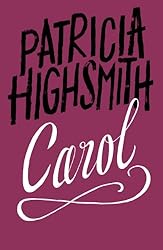
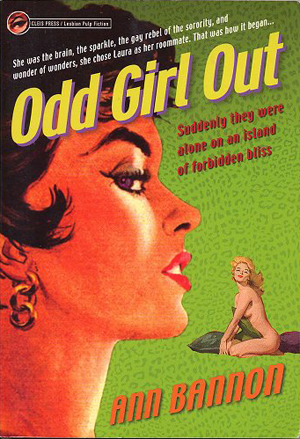
Carol by Patricia Highsmith VS Odd Girl Out by Ann Bannon


Somehow I have found myself reading two lesbian novels written in the ‘50s one after the other. I had both Ann Bannon’s and Patricia Highsmith’s books under my radar for quite some time, but only the news recently come to my attention that a movie based on Carol was coming out soon prompted me to finally read it (or listen to it, rather). After Carol, I craved more lesbian fiction and I turned to Ann Bannon. Both books being published in the same era, only few years apart – Carol in 1952 and Odd Girl Out in 1957, they ask to be compared to each other.

Now, I don’t know how strict the publishers were at the time when they were asked by the Censorship to avoid any positive final outcome of lesbian and gay relationships, but somehow Carol, or the Price of Salt as it was originally named, managed to overcome those limitations and get away with a relatively happy ending. It’s well known for that, unfortunately. I say unfortunately because I have the feeling I would have appreciated the ending more if I hadn’t known that. As it happens, I did, and I wish it had been happier. But I had little or no knowledge of how the lesbian fiction of the time was, so of course I didn’t have any terms of comparison. Now I have read another one, Odd Girl Out, and compared to it, it seems like a celebration of all things lesbians, of EVERLASTING and TRUE LESBIAN LOVE. It’s even more surprising, knowing that it was published five years earlier than Ann Bannon’s novel. Could it be that its New York setting made it more permissive or more realistically open to different kinds of love than the conservative microcosm of a Midwestern University? Perhaps, but for whatever reason the two books are strikingly different.


Carol is the story of Therese, a 19-year-old stage designer who, at the beginning of the story, is working in a department store for some extra cash at Christmas, and of Carol, a charming woman in her '30s, about to get a divorce. One day Carol comes to Therese's desk to buy a doll for her daughter and Therese quite literally falls in love with her at first sight. She sends her a Christmas card later and Carol replies by inviting her out for coffee. They start an intimate friendship that later on becomes a love affair. There are complications though, as Carol is going through a divorce and the husband is not ready to let go of their daughter’s custody without a fight.

I enjoyed the writing in Carol. It’s quite beautiful and perceptive. The story is as much about Therese’s complete entrancement with Carol as about Therese’s struggle to find her place in life. To find meaning and fulfilment.
I loved the age gap between the two women and I was fascinated by Carol as much as Therese was. Their relationship isn’t one between equals, though. Carol has way too much control over Therese and never seems to reciprocate the younger woman’s feelings in equal measure. For a while it seems Therese is merely a distraction, a way of taking her mind away from her bigger problems in her life. She’s guarded and cold, always keeping Therese on the edge, never fully letting her in and embracing their romance without reservations. This was the only reason that kept me from falling in love with the book completely. I wanted to see more passion from Carol. I know it was there, she just never let herself show it. I understand her pain and fear of losing her daughter were clouding her ability to show love to Therese, but it made me weary of her, and I never fully trusted her. I didn’t trust her even if I knew how it was going to end. 

This said I am really excited that Cate Blanchett is playing Carol. She seems perfect for the role and I couldn’t imagine anyone else playing her.

After Carol, I was craving a true, passionate lesbian romance and I turned to Ann Bannon. Ha! Little did I know.

At first, I thought the budding romance between young and timid Laura and confident and charming Beth was really cute. I loved how protective Beth was of Laura, how despite her teasing, she never means to hurt her. This, however, proves to be her biggest mistake. I never fully warmed to Laura, until the end, when she surprised me, by showing how much she has grown and how much Beth had underestimated her. I found Laura throughout the book to be annoying and spoiled and whiney. I liked Beth at first, I liked how sure of herself and fearless she was. But as soon as she starts falling in love with a guy, I started losing interest. This was supposed to be my steamy, forbidden, lesbian story! What was happening? Alas, heteronormative was happening. Of course, Beth hadn’t met the right guy yet. And of course, Charley was finally that right guy. Who tells her that lesbian relationship can only happen during childhood, that women should like men only, otherwise they are refusing to grow up and to accept reality.

Thankfully Laura is having none of this shit. Even though it takes a while for her to stop acting all confused and clueless about who she is. I liked the ending, which is supposedly a bad one for their romance? Except it’s the best ending that I could have asked for. I couldn’t wait for Laura to get rid of Beth. It took her way too long. That ending gives me hope. And it’s the reason why I will keep reading these books, and hopefully, finally, get my steamy, forbidden, lesbian story.

Compared to Carol, there was a lot more talk about how homosexuality is wrong and illegal and how it can stop a woman from growing up. Surprisingly in Carol, Therese never questions herself about her love for Carol. It just happens and she accepts it completely. She might have posed for a moment to consider how society viewed her sexual inclinations, but she never lets them affect her. The only time the issue is raised is by a man, who is speaking out of hurt and disappointment. It’s never raised after that. It’s not Carol and Therese’s concern to judge or hate themselves for what they’re doing, which is beautiful. Of course, there are consequences to pay, because they are still lesbians in the ‘50s, but I loved how self-hate or denial was never even a thing for them.
In Odd Girl Out, the issue is raised again and again. Mostly by men, but also by Beth, who does really think that lesbianism is a thing to outgrow, and by her friend Emmy, who doesn’t even begin to comprehend how a woman could find another woman attractive. ‘What’s there to want?’ she says. But as much as she doesn’t understand it, she doesn’t judge it either.  The only one who isn’t affected by this is Laura, and that’s her redeeming quality. Like Therese, she never questions her feelings, never doubts them and never betrays them. Which is something to admire in both of them.

I probably will never find the passionate, Tipping-the-Velvet kind of romance I want from these books, but I will keep reading them. I love the vintage setting, I love to read lesbian stories that were genuinely written at that time, and I love to see how much they dared, and how much they could get away with.


And hopefully Carol the movie will be as satisfying as that trailer promises to be.

Friday, 30 January 2015

Every Day by David Levithan - Narrated by Alex McKenna

I was hooked from the first minute. It was the combination of an intriguing premise and the pleasant sound of Alex McKenna’s voice. She has this low, husky tone with a gentle and musical accent, which was very easy and pleasant to follow. Sometimes people tell me the reason they wouldn’t be into audiobooks is because they would find it hard to follow, that their attention would wander. I thought so too, but I found that as long as the reader doesn’t go too fast (and that I like the voice, of course) that problem doesn’t occur. Needless to say, I never had that problem with Alex.
The story follows A as he/she tries to lead a normal life when everything about her/his/its (hir?) life isn’t. A changes bodies every day, never having owned their own (yeah, I’ll go with their, although I thought of A as 'she' while listening). I find this concept mindboggling. How does one define themselves without not just a body, but a life and an identity that never change. A family, a history that belongs to you. Without friends that know the real you, not the person you’re inhabiting. None of this is part of A’s life. A has to adjust to their body and life changing every day without having any control over it. It sounds like the stuff of nightmare, but A has decided, now at the age of 16, to accept it and go with the flow, to live in the present and not worry about it too much. Until A meets Rhiannon and falls in love with her.
 Now, I can’t tell much more without giving it away, but let me tell you it kept me hooked till the very end. It’s not a perfect book by any means, but I loved it all the same. It explores many issues: body image, identity, morality, sexuality, love. Especially love. We like to say that it’s what’s inside that matters. That the physical part is not as important as one’s personality, one’s “soul”. But do we really mean it? How much of our love or infatuation is based on appearances, on the physical aspect of it? I am not ashamed to say that for me the physical side is very important. I fall in love with the person as a whole, I love their personality and mind as much as their bodies. But with A you can only get one immutable aspect of the package. The rest is up to fate. Loving A would mean loving a ‘conscience’ but not a ‘person’, at least not in the way we’re used to. For this reason, and for many others (lack of lasting relationships, including the love of one’s family, for one) my heart ached for A. It still does, if I think about it. I read some reviews where people were outraged by A’s behaviour. They resented them the way they “used” their bodies, for their own purposes. I would agree with this view if A had any choice in the matter. If A had a body to return to and used their powers to do as they please, while hijacking other people’s lives, but that’s not the case. A has NO body, NO life of their own. What are they supposed to do, surrender to their fate and pretend to be someone else their whole life? Be completely selfless and devote their life to be as invisible and innocuous as possible? Just passing through, pretending they don’t exist? It seems cruel, to ask this of someone’s life. It’s easy to accuse but what would you do, especially if you fell in love? And remember, A is only 16.
 In any case, whether you'd love the book or not, it'd still be worth reading (or listening!), even if just to boggle your mind for a while.

Monday, 15 September 2014

Attachments - Rainbow Rowell

Oh, Rainbow. I want to hug all of your books, and then I want to hug all of your characters, and then I want hug all of you. I just feel very huggy every time I read your stuff. And now I feel like I have to save up Landline for later times because that’s the only one I haven’t read yet and after that there won’t be any more and if I read it as fast as I read this one  I’ll be done tomorrow and that’s not OK. So I’ll wait a bit longer.  I need to know there is still something Rainbow-y out there that I haven’t read.

Attachments is another Rowell-y romantic story, except this is a romantic comedy.  And it’s her first book, which I would have never guessed. Set in 1999, when the Internet was still new and there was no Facebook or Youtube or Tumblr and god knows what people were doing online back then. Nevertheless, they still managed to waste time on it. Come to think of it, wasting time is a big theme in this story. There’s Beth and Jennifer, two journalists who email back and forth at work and talk about their life and sometimes even about work, but they never seem to actually, you know, work. And then there’s Lincoln, who is the guy who’s supposed to check all the filtered emails workers send to each other and then report them if they’re using them inappropriately. This was before Gmail, although I’m pretty sure Hotmail already existed then so why weren’t they using that. Anyway, Beth and Jennifer aren’t using Hotmail, they’re using the company email service which can be controlled and flagged. Their emails get flagged constantly, but they’re so funny and smart and likeable in their messages that Lincoln can’t bring himself to report them. Mainly because that would mean stop reading their messages and he doesn’t want to do that. Beth’s and Jennifer’s emails are the only form of entertainment that Lincoln has at work. He works late shifts  and doesn’t have much to do, so he’s always hard pressed to find something to fill his day and not make him feel like he’s wasting his time and his life. Which he still does, inevitably. And then slowly but surely, he starts falling in love with Beth, even before meeting her.
“There’s something really romantic about that. Every woman wants a man who’ll fall in love with her soul as well as her body. But what if you meet her, and you don’t think she’s attractive?”
“I don’t think I care what she looks like,” Lincoln said. Not that he hadn’t thought about it. Not that it wasn’t exciting in a weird way, not to now, to imagine.
“Oh, that is romantic,” Christine said.
Now, these premises could be extremely creepy. And I’m sure some people might still think they are. But it’s all down to Lincoln and his adorableness. I wish I was straight so I could have a proper crush on a fictional character and cry because he’s not real. He is perfect. OK, he’s not because he keeps reading those emails even though he should have stopped as soon as he decided he would never give them a warning. And I did cringe every time those messages appeared on paper because it meant he hadn’t stopped reading them LIKE HE SHOULD HAVE. But still. He’s Lincoln and he’s precious. He never really got over his first love which he thought was gonna last forever; he plays Dungeons & Dragons on Saturday nights; he prefers reading books then going out in loud bars with crappy music and smelly people to try and meet girls. But most importantly, he’s nice. Incredibly, genuinely, painfully nice. Not boring nice. Just REALLY nice.And apparently also really cute. Now, remember how wasting time was one of the big themes? Well, that also relates to Lincoln’s approach to life, and, more specifically, to how he keeps putting off meeting Beth, even when he’s completely sure he’s completely in love with her. It might have something to do with the fact that Beth has a boyfriend, but still, boyfriend’s a douche. It was one of them cases of seeing the pages getting dangerously near to the end and realising with increasing anxiety that there was no time for EVERYTHING THAT NEEDED TO HAPPEN. 

But even without all the things that I needed to happen that weren’t happening , I loved everything that leads up to them. Lincoln’s relationship with Doris.Christine and all his D&D friends, but mostly Christine.His mother.HIS MOTHER. I fucking loved his mother, I think I had a tiny bit of a crush on her, actually. She sounds really cool, what with her doing massages at festivals and knowing all about how plastic is bad for you because it leaches into the food and how she’s divorced and then had a child from some guy that we don’t know anything about. It’s all very intriguing. Also, she’s funny and she cooks delicious meals for Lincoln and she really cares for him. OK, she might have some trouble letting him go and live his life, but nobody’s perfect.

And I loved all the song references (which I sometimes played on my phone on youtube as soundtrack when they were mentioned), and all the movie references and now I really want to watch The Goodbye Girl and ruin any other romantic comedy I might watch after that.
And of course I enjoyed reading Beth’s and Jennifer’s  emails, which were witty and smart and funny and sometimes insightful,  but not as much as I loved reading about Lincoln.


The only downside effect of reading Rainbow Rowell is that now I feel like I want a romance like this. Something so intense and everlasting and inevitable. But without the invasion of privacy. 

Thursday, 7 November 2013

Fangirl - Rainbow Rowell

Oh Rainbow… you don’t just have a fabulous name. You also write the kind of books that make *me* want to write. I did not expect this, especially after loving Eleanor & Park so much. I loved the book and I adored the characters, but I could hardly identify with them. At least not as deeply as I did with Cath.
Fangirl is basically a book about Tumblr people. I feel like it belongs to the whole community and indeed it has been appropriately chosen as Tumblr’s first bookclub read. In a way, it manages to condense in one single character so many young women (and boys? Probably boys too but not as visibly) who are struggling with their awkward self, with anxiety and self-acceptance, with not fitting in and feeling different from anyone else. Young women who are (sometimes quietly, sometimes less so) proud nerds and enthusiastic fans of certain TV shows or books or celebrities, and feed their passion with endless rewatches/re-reads, cosplays, gif/graphic making, comic-cons, and of course, fanfiction writing. 


Also, a lot of this.


 I’m amazed at the amount of people who don’t know what fanfiction is. It’s just something that I’ve always been aware of. At least I can’t remember a time when I didn’t know what it was. Even before ever reading one, I’ve always liked to imagine different or longer endings for movies, alternative situations for TV shows, and of course, better and more satisfying scenes for my “ship” (the two people I want to be together, in layman’s terms). So, when I first came across fanfiction, I must have regarded it as a natural product of fangirling, which I’ve always done. I’m terrible at writing it myself. I tend to just imagine situations where I’m in the show/book, interacting with the characters, normally ending up making out with one. Basically the kind of thing that’s shunned by the fanfiction communities. So I just read it, every now and then. I’m not a regular fic reader, but I do like to look for one, when I’m in need of something that the show (let’s just be honest, it’s mostly a TV show thing, for me) can’t give me. Mostly crackships, like Magnacarter (Sam Carter and Helen Magnus) which you probably wouldn’t think would be a perfect pair, on account of them being played by the same actress, but you’d be WRONG. Wrong, wrong, wrong. They’re made for each other. You just need to look harder. But also regular ships, like the mighty painful Sam/Jack (Jam) from SG-1. Since the writers forgot to give us a proper onscreen resolution for these two poor souls, one needs fanfic to fill the hole and to sooth the pain caused byhardcore shipping.

So yeah, Cath is one of them. One of us. I felt like Rainbow nailed her character. I didn’t think she represented a stereotype. And even if she did, she used one that could be easily embraced and loved by a lot of young women. A lot.Cath is somehow special, though. She has the gift of storytelling. In her online world, she’s famous. She has fans of her own. People read her fics every day and regard her as their favourite writer. Not many people can say that. And yet, IRL, she’s painfully shy and awkward. She hates parties and drinking and would rather live off energy bars than venture into the dining hall of her new campus. Because Cath is a freshman and has to face the terrifying prospect of going through a whole academic year on her own, without her twin sister, who up until then, had been her inbuilt BFF. This being a YA story, things don’t stay the same for long. Slowly Cath starts making friends who are not her twin sister Wren (whom for most of the book behaves like a douche and whom I disliked wholeheartedly, but this being YA, she redeems herself at the end, which we liked) and even gets a boyfriend. The one I had been shipping her with from the start. Yay! Not the other useless, annoying, self-absorbed jerk (also, for the record “Second person is never the answer. Nothing good has ever been written in second person. Second person is for twenty-year-olds in creative writing classes who like beat poetry and have finger-mustache tattoos”©Raych) 
With Cath and her boyfriend (not gonna say who because slight spoilers but it’s pretty obvious) Rainbow throws another Eleanor & Park. Their romance is just as adorable and passionate and cute, and did I say adorable. The only thing that was slightly annoying was this whole Starbucks glorifying thing. What is it with Americans and Starbucks? Somehow it always manages to become this magic, mythified place where wonderful things happen. I don’t get it. I actually tried their much hyped Pumpkin Spice latte this year, just to see what the whole fuss was about, and it was disgusting. I couldn’t even finish it. The most expensive, undrinkable coffee I’ve ever bought. I know they can have (sometimes) nice coffee, but so do a lot of other cafes who are not multinational, anti-union, independent-cafes-killing machines. So that was my pet peeve. But it was quite pettish, as it didn’t stop me from ADORING thing book and going all  


Also, as I said at the beginning, it made me want to go back to writing. Which is something that happens on a regular basis, and it doesn’t mean it will last, but it’s a good feeling. Right now I’m not thinking that my writing sucks and that there’s no point in trying. I’m thinking that it can be good, and all I have to do is try.


So, yeah, I really really liked it. I loved the humour, I loved how it’s written as if Cath was writing it in her head instead of just narrating. I LOVED Reagan, but I loved Cath’s dad even more. I mean, how can you not love a dad who says stuff like  “Honey, I’ve watched a lot of 90210. The parents weren’t even on the show once Brandon and Brenda went to college. This is your time – you’re supposed to be going to frat parties and getting back with Dylan”.  I loved that they kept referencing Battlestar Galactica even though I haven’t seen it yet. I loved that the mother wasn’t just simply redeemed at the end, because NO. And finally, I loved the whole Simon Snow idea, and even thought that it could be even better than Harry Potter and that I’d love to read it (but I’d like to read Carry on, Simon more so I think Rainbow should publish it somehow as a sort of extra feature for the book. Just a thought). 

Basically, I loved it. Rainbow Rowell has officially ascended to the “Authors I would read anything they’ve ever written” list.

Monday, 14 October 2013

Eleanor & Park - Rainbow Rowell


So I read Eleanor & Park because all the cool kids are reading it. Bookwormy, nerdy, Internet  cool kids, obviously. It’s all over the interweb, you couldn’t miss it even if you tried. Also, John Green is a fan. Him and the whole Internet. But anyway, I read it and 

Damn you book, why?

Everything about this book is precious (OK, except the ending, or everything that leads up to the ending, because WTF happens AFTER the end? Is it like one of those ending where you get to decide? Can I decide? Well, I’d scrap the last few pages and rewrite the whole thing. But if can’t do that, I’ll just write a proper epilogue where it ends like I want it to end, OK?)
So, yes, everything is precious. Eleanor and Park are the absolute adorbz. With all their nerdy love and their music and their comics and their shyness and insecurities and the whole I-can’t-breathe-when-you’re-away-so-it-feels-like-I’m-always-holding-my-breath-all-the-time thing and the I-don’t-like-you-I-need-you thing and their Star Wars references and basically EVERYTHING.
Some parts were painful to read, but mostly  it was a constant source of feels. Good feels. Lots and lots of good feels.Until the thing happens. Yeah, there’s always A THING that happens. It’s not as gut-wrenching as The Thing in Code Name Verity but it’s still pretty awful, and unexpected because eww and nope. I didn’t realise this person could get even more horrible than he was already. I was actually almost hoping he would turn up not to be this horrible, but no such luck. My only problem with the book is Eleanor’s mother. How can she even look at her daughter without slapping herself. I am aware that awful persons exist, and that’s Richie’s role. I get that. But people who on paper aren’t awful but put up with awful people and get their children hurt in the process? How is that a thing?
And then, on the opposite side of the spectrum, you have Park’s parents. They aren’t perfect, but they’re pretty awesome. Especially Park’s dad towards the end. I did love him a lot. First he throws a fit about Park’s eyeliner and soon after, when they’re getting ready to go to some boat show, he hurries his son up saying “Come on, Park, get dressed and put your makeup on”. How can you not love him.
So yeah, Eleanor and Park are the cute, but also smart and sarcastic and both beautiful in their own unique, special way, and they’re so perfect on their own but even more so when they’re together. The writing is up there with John Green’s standards, but it also has its own personal flavour which I loved. The secondary characters were brilliant too, even though I didn’t get some of them. And then the ending was asdfghjjksdffggh SHIT NO WHY WOULD YOU DO THIS TO THEM, keeping with the tradition of great books that will break your heart, stomp on it, and then eat it for breakfast.
But the cover. Can we talk about the cover for just a minute? I know there are different covers out there, but I had to deal with this one. I do like it as its own piece of art. It’s really pretty and definitely my style, I’m not discussing its artistic merits. My problem is its depiction of the two characters. Anyone, ANYONE, who has read the book would know that it’s not them. For starters, when has Park ever gone on a skateboard? If he has, the author has kept it from us. And then for the biggest culprit, the girl who is supposed to be Eleanor. Straight hair and super skinny? 


But at least it’s pretty, right?

So, anyway, if you don’t know what else to read after The Fault in Our Stars and want to be punched in the feels with more cute romance than you can possibly handle, go for it. You can shake the fist at me later.