Showing posts with label reviews. Show all posts

Saturday, 10 October 2015

Graceling - Kristin Cashore

“I'm not going to wear a red dress," she said."It would look stunning, My Lady," she called." She spoke to the bubbles gathered on the surface of the water. "If there's anyone I wish to stun at dinner, I'll hit him in the face.

 I was barely about fifty pages into Graceling when I knew I was going to read the entire series. I loved everything about it. The writing style, the main characters Katsa and the little I knew about the story. By the end I had learned to love the rest of the characters, despise the villain and I definitely wanted to know more about that world.

Katsa is a Graceling, which means she has been 'graced' with a special power. Although at the beginning of the story we find her regarding her grace, the ability to kill anything and anyone, as more of a curse than a gift. She is forced to lend her abilities to the whims of the King, her uncle, who uses her has as his personal thug to enforce his will upon his subjects. Until one day she decides she's had enough.

This is barely scratching the surface. There is the secret Council that Katsa started, which is a network of people around the Seven Kingdoms, who help the helpless and right all sorts of wrongs. The council was one of my favourite things about the story.
Then there are all the other wonderful characters. Po, with this kindness and humility, and Bitterblue with her stern and quiet wisdom. And Raffin and Bann who are sooo gay for each other. And Captain Faun. And Oll.

But most of all Katsa. She's going to join my realm of beloved ass-kicking heroines, with Buffy and Katherine Tremontaine and Sam Carter and Starbuck...
Although I have to say, in a fight with any of them, she'd come up on top, no contest. She's basically invincible. And aside from her impulsiveness and her temper, she's kinda flawless. Which in someone else's hands could make for a boring character. But Katsa is the opposite of boring. Because she is quite vulnerable when it comes to love and because she keeps facing extreme challenges in order to defend the people she cares about, and because...I don't know, because she's awesome.
In a way, she's a stereotypical female action hero, because she despises everything "feminine" and has vowed never to marry or have children, but I have no problems with that. I am open to all sorts of female heroes. Those who like dresses and balls and drama like Katherine, and those who want to stay single and let their hair flow in the wind as they ride through the glen firing arrows into the sunset, like Katsa (and Merida). Also I love that she gets to represent those women who never felt the need for children but are made to feel unnatural because of that. Katsa is lucky because she has the luxury to choose her own freedom over the bondages of marriage, but she also lives in a fundamentally patriarchal society, so her choices are defined by that. She doesn't think she can have a relationship that won't limit her freedom, until she meets Po who show her that she can have both. But I am glad that she hasn't changed her mind about having children, or about getting married.
And how awesome is it that she starts teaching women to defend themselves. So awesome.

I have just started Fire and I am already missing Katsa and Po and Bitterblue, but hopefully I'll warm up to the new characters soon enough.

Monday, 28 September 2015

The Privilege of the Sword Revisited - the audiobook

I’ve just finished listening to the Privilege of the Sword’s audiobook and even though I already reviewed the book back in 2012 there are some new (and old) considerations I’d like to make.  


First of all, the production is amazing. It’s part of the “Neil Gaiman’s presents” audiobook label and because of that it’s been given the luxury treatment. First class dramatizations, original soundtrack, sound effects, the works. I mostly appreciated one of the two main narrators, Barbara Rosenblat, who I’m only after realising played freaking Rosa in Orange is the New Black! O M G. According to Neil, she’s the Meryl Streep of the audiobook world and I can see why. She’s got this beautiful, deep, rich voice that suits both men and women, and it just makes you feel you’re in safe hands. All you need to do is let her voice paint the words in your head and enjoy the ride. Ellen Kushner narrates the parts in first person, from Katherine’s point of view, and that works well too. Although I was expecting more dramatized scenes, like in Swordspoint. Felicia Day plays Katherine and I wish she had done more. You sort of forget she’s supposed to play her, until every now and then you hear her voice reading a letter or saying a couple of lines. That’s the only disappointing thing about this audiobook.


I listened to Swordspoint first, which meant I had now a better understanding of the mad Duke and his relationship with St Vier, which definitely added layers to his story. But as much as I enjoyed the first book and as much as I missed the scheming Duchess Tremontaine, my interest is all for Katherine. I can never have enough of her awesomeness and I really wish Kushner wrote more books about her. It feels like we’ve barely started to know her when the book ends.

This time around I didn’t notice the flaws in the writing style as when I read the book. I don’t know if I was particularly harsh the first time around but in the audiobook format the writing just flows naturally and I was never bothered by it.

And this time I did feel the romance between Katherine and Marcus. It felt like a beautiful and natural continuation of their friendship. And Marcus is such a wonderful person and a perfect match for Katherine in every sense, how could I not see this before. I was probably hoping Katherine’s bisexuality would steer her toward a girl, but there weren’t any available, really. Artemisia is not right for her, and the Black Rose, as much as I wish she could be, isn’t interested in a teenager with a crush on her.

Aside from my new perspectives, I enjoyed it just as much as the first time. I still think Katherine's character development is wonderful. I love that she shows her age in her complete idealism, in her love for drama and tragedy, and in her undying will to defend women's honor to the death, but also in her love for mishief and adventures. I love that she's shown loving aspects of both the women and the men's world. She still love all her gowns and frills and laces, but she also loves swordfighting and swashbucking, and sneaking out with Marcus, keeping secrets from the Duke and generally getting up to no good. 


I wish there was more fanfiction about Katherine. There’s plenty about Alec and Richard, but virtually none about Katherine and whoever (I’m not picky. Even just Katherine would be fine). Or maybe I don't know where to look? Anyone care to direct me toward them?

I already miss her and everyone else and I really wish it had been double the length. 

Thursday, 24 September 2015

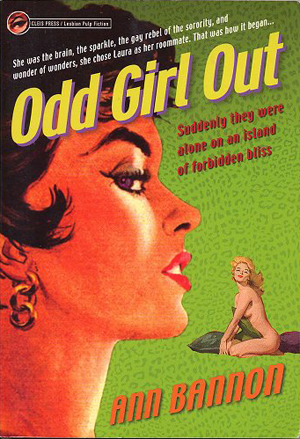
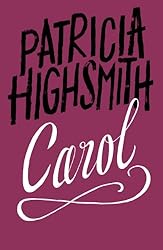
Carol by Patricia Highsmith VS Odd Girl Out by Ann Bannon


Somehow I have found myself reading two lesbian novels written in the ‘50s one after the other. I had both Ann Bannon’s and Patricia Highsmith’s books under my radar for quite some time, but only the news recently come to my attention that a movie based on Carol was coming out soon prompted me to finally read it (or listen to it, rather). After Carol, I craved more lesbian fiction and I turned to Ann Bannon. Both books being published in the same era, only few years apart – Carol in 1952 and Odd Girl Out in 1957, they ask to be compared to each other.


Now, I don’t know how strict the publishers were at the time when they were asked by the Censorship to avoid any positive final outcome of lesbian and gay relationships, but somehow Carol, or the Price of Salt as it was originally named, managed to overcome those limitations and get away with a relatively happy ending. It’s well known for that, unfortunately. I say unfortunately because I have the feeling I would have appreciated the ending more if I hadn’t known that. As it happens, I did, and I wish it had been happier. But I had little or no knowledge of how the lesbian fiction of the time was, so of course I didn’t have any terms of comparison. Now I have read another one, Odd Girl Out, and compared to it, it seems like a celebration of all things lesbians, of EVERLASTING and TRUE LESBIAN LOVE. It’s even more surprising, knowing that it was published five years earlier than Ann Bannon’s novel. Could it be that its New York setting made it more permissive or more realistically open to different kinds of love than the conservative microcosm of a Midwestern University? Perhaps, but for whatever reason the two books are strikingly different.


Carol is the story of Therese, a 19-year-old stage designer who, at the beginning of the story, is working in a department store for some extra cash at Christmas, and of Carol, a charming woman in her '30s, about to get a divorce. One day Carol comes to Therese's desk to buy a doll for her daughter and Therese quite literally falls in love with her at first sight. She sends her a Christmas card later and Carol replies by inviting her out for coffee. They start an intimate friendship that later on becomes a love affair. There are complications though, as Carol is going through a divorce and the husband is not ready to let go of their daughter’s custody without a fight.

I enjoyed the writing in Carol. It’s quite beautiful and perceptive. The story is as much about Therese’s complete entrancement with Carol as about Therese’s struggle to find her place in life. To find meaning and fulfilment.
I loved the age gap between the two women and I was fascinated by Carol as much as Therese was. Their relationship isn’t one between equals, though. Carol has way too much control over Therese and never seems to reciprocate the younger woman’s feelings in equal measure. For a while it seems Therese is merely a distraction, a way of taking her mind away from her bigger problems in her life. She’s guarded and cold, always keeping Therese on the edge, never fully letting her in and embracing their romance without reservations. This was the only reason that kept me from falling in love with the book completely. I wanted to see more passion from Carol. I know it was there, she just never let herself show it. I understand her pain and fear of losing her daughter were clouding her ability to show love to Therese, but it made me weary of her, and I never fully trusted her. I didn’t trust her even if I knew how it was going to end. 

This said I am really excited that Cate Blanchett is playing Carol. She seems perfect for the role and I couldn’t imagine anyone else playing her.

After Carol, I was craving a true, passionate lesbian romance and I turned to Ann Bannon. Ha! Little did I know.

At first, I thought the budding romance between young and timid Laura and confident and charming Beth was really cute. I loved how protective Beth was of Laura, how despite her teasing, she never means to hurt her. This, however, proves to be her biggest mistake. I never fully warmed to Laura, until the end, when she surprised me, by showing how much she has grown and how much Beth had underestimated her. I found Laura throughout the book to be annoying and spoiled and whiney. I liked Beth at first, I liked how sure of herself and fearless she was. But as soon as she starts falling in love with a guy, I started losing interest. This was supposed to be my steamy, forbidden, lesbian story! What was happening? Alas, heteronormative was happening. Of course, Beth hadn’t met the right guy yet. And of course, Charley was finally that right guy. Who tells her that lesbian relationship can only happen during childhood, that women should like men only, otherwise they are refusing to grow up and to accept reality.

Thankfully Laura is having none of this shit. Even though it takes a while for her to stop acting all confused and clueless about who she is. I liked the ending, which is supposedly a bad one for their romance? Except it’s the best ending that I could have asked for. I couldn’t wait for Laura to get rid of Beth. It took her way too long. That ending gives me hope. And it’s the reason why I will keep reading these books, and hopefully, finally, get my steamy, forbidden, lesbian story.

Compared to Carol, there was a lot more talk about how homosexuality is wrong and illegal and how it can stop a woman from growing up. Surprisingly in Carol, Therese never questions herself about her love for Carol. It just happens and she accepts it completely. She might have posed for a moment to consider how society viewed her sexual inclinations, but she never lets them affect her. The only time the issue is raised is by a man, who is speaking out of hurt and disappointment. It’s never raised after that. It’s not Carol and Therese’s concern to judge or hate themselves for what they’re doing, which is beautiful. Of course, there are consequences to pay, because they are still lesbians in the ‘50s, but I loved how self-hate or denial was never even a thing for them.
In Odd Girl Out, the issue is raised again and again. Mostly by men, but also by Beth, who does really think that lesbianism is a thing to outgrow, and by her friend Emmy, who doesn’t even begin to comprehend how a woman could find another woman attractive. ‘What’s there to want?’ she says. But as much as she doesn’t understand it, she doesn’t judge it either.  The only one who isn’t affected by this is Laura, and that’s her redeeming quality. Like Therese, she never questions her feelings, never doubts them and never betrays them. Which is something to admire in both of them.

I probably will never find the passionate, Tipping-the-Velvet kind of romance I want from these books, but I will keep reading them. I love the vintage setting, I love to read lesbian stories that were genuinely written at that time, and I love to see how much they dared, and how much they could get away with.


And hopefully Carol the movie will be as satisfying as that trailer promises to be.
Tuesday, 15 September 2015

Lair of Dreams - Libba Bray


I’m so glad this was a New York Times # 1 best seller. Mostly because it’s the sequel of one of my favourite books I’ve listened this year. But also because there is so much diversity, it might explode.

See what I did there
The Diviners’ strength was in its tight plot, its charming characters and its 1920s New York allures. The sequel, Lair of Dreams, seems to have a less tight plot at first, because there is so much going on, and not all is part of the main story. There is an underlining arc that continues from the first book which doesn’t resolve here, so I’m expecting at least a third instalment for that to unravel. And if at first I thought I wasn’t going to love it as much as the Diviners, I ended up doing just so.

I loved how the book’s attention stretched onto other characters. Evie is not the main ‘diviner’ anymore. I absolutely adore Evie and loved every second we spend with her, but I was happy to get to know Henry more. I didn’t realise how much of a charmer he really is. I adore him too. And I love Ling. I looooveeeee her. She’s snarky and smart and she’s into science and stuff. She’s also half Chinese, half Irish. And she also has infantile paralysis so she’s disabled. And she’s also kinda gay.


 Oh, and she’s also a dream-walker, like Henry, so she’s one of the gang now.  


Then there’s Theta, who is still super cool and beautiful and in love with Memphis, but I wish the two of them had more screen-time. Or at least I wish Theta had. I love her and she needs a better storyline. Anyway, her relationship with Memphis is another tick on the diversity box as Memphis is black and in the ‘20s it was still a big no-no.

Then there’s Henry who is totally gay for Louis, who is a boy, so let’s tick another box. Their romance is so painful and real and so heart-breaking and just


And then there’s the underlining theme of the constant racism our characters have to face on a daily basis. How the Chinese and the Irish and the Italians are made to feel foreign in their own homes. There are mentions of the KKK and the Chinese Exclusion Act. Of the hardships their parents and grandparents had to face to arrive to America, only to be faced with hatred and abuse when they arrived there.  

It deals with politics, eugenics, science. With homophobia and xenophobia and classism. But also with love and loss and shattered dreams and pain.

I love that there’s a diviner gang now. I hope they gang up more in the third book. And I don’t even care that it’s completely unlikely that so many diviners happen to be friends with one another. I choose to believe that it’s their powers that brought them together (which it might well be, who knows). Because at this stage we have Evie, Sam, Henry, Ling, Memphis and Theta, all divining away. Even Memphis’ brother. The only one who hasn’t been outed yet is Theta, but I figure it’s going to happen soon enough. (relatively speaking, we might have to wait another three years. Oh God.) Then there’s Jericho who is also kinda superhuman in his own way. The only poor normal sap is Mabel. I don’t know what to feel about her, she doesn’t have much to do, aside from mooning over Jericho, who still moons over Evie, who moons over both Jericho and Sam.

Which brings me to one of my main point of interest in the book. The Shipping.


There has been some major shipping going on, of the boy/girl kind. MAJOR. I mean, I already shipped Evie and Sam in the first book. Instinctively, I felt they had a lot of chemistry and I did not see the Jericho factor at all. There was no build-up to it. But this time, oh boy. Libba used an all-time favourite trope of mine, the fake-couple. In this case fake-engaged, instead of fake-married, but it works just as well. Top it up with tons of chemistry and brilliant banter and secret flips of the stomachs that MUSTN’T happen but do happen because the heart can’t listen to reason, and there you have it, perfect shipping material. Not to mention the fact that they’re made for each other. I just wish we didn’t have to deal with a love triangle. I fucking hate love triangles. I hope Jericho really falls for Mabel and that’ll be the end of it. This sequel definitely seemed to steer in this direction anyway, although it threw in some good ol’ angst between Sam and Evie for good measure. So we’re left with oozes of UST and Angst but no resolution. Which is fair enough, as it’s only the second book. But please let them be endgame. I ship them so hard, you guys.


I haven’t even mentioned the main plot yet. And the main villain. Which turns out to be really spooky. Not as flat out scary as Naughty John. This one was more layered with emotions, but still creepy as hell. There really was a terrible death. So, so terrible. I can’t even think about it, it’s the true stuff of nightmares. And then there are more terrible deaths, and people disappearing in the tunnels, and there are more ghosts and sleeping sickness and creepy dreams… I didn’t realise how scary the story was until I listened to it at night. I realised I had skipped some parts so I went back to it, so happy to have another hour or so still left. But I made the mistake of going to bed first. Do not make the same mistake. I started being scared of the dark, of creepy veiled women with a music box lurking in the shadows, telling me to dream with them with their demonic voice. Of smiling ghosts with sharp teeth running after me.

Just don’t read or listen to this after dark. You’ll be fine.

Now I only need to sit tight and wait for the next book. I need to know about Project Buffalo, about the mysterious men stalking the museum, about Will and Sister Walker’s secret mission, about Sam’s mother, about those cards in that office and what they mean, about Blind fucking Bill and when he’s going to be found out and stopped, about the man in the Stove Pipe Hat and about the eye with the lightning strike over it.

And I need to know if Sam and Evie get their shit together.

And I also want a new boyfriend for Henry and a girlfriend for Ling. 

Monday, 2 February 2015

The Diviners by Libba Bray - Narrated by January Lavoy

Another audiobook hit. I don’t know what made me pick this one out the rest. It has never even been in my wish list. I had read a couple of Libba Bray’s books before, which I was moderately enjoying until it was revealed that my favourite character was actually the big villain of the piece, and that put me off reading the rest of the series.
 The Diviners, on the other hand, was a completely different matter. I could not stop listening.
It ticked so many personal boxes: New York, historical setting , female lead (although it took me a while to warm up to her), intriguing side stories and characters, supernatural & superpowers… Because of the main characters’ dynamics and the fact that it has a supernatural /horror theme, it had a very Buffy-esque feel to it, which only added to my appreciation. I am not a sucker for murder mysteries in general, but this one wasn’t a true mystery. We know who did it, it’s our characters who need to find out, so it’s more of a murder investigation, with supernatural twists. We like.
Evie O’Neill, the MC, was hardly a love at first listen for me. She seemed exactly the kind of girl I’d avoid as a teenager. Attention-seeker, party-goer, that kind. But as the story goes along, I learned to like her for her humour and sharp wit, and later even admire her for her courage. I did NOT approve though, of her choices in love interests. Not because they’re wrong (although, *romantic spoiler ahead* it was indeed a shitty thing to do to your best friend) but because I was shipping her hard with another person. I still have hopes for the next books though.
 And then there’s the narrator, January Lavoy. She was brilliant. Her tone was pleasant, her pace perfect, she did all the voices differently, so you always knew who was speaking (OK, some of the male voices sounded the same, but you’d still know they were male at least), and the scary voices were REALLY scary. It would have been a perfect R.I.P. challenge read.
The sequel can’t come out soon enough.

Friday, 30 January 2015

Every Day by David Levithan - Narrated by Alex McKenna

I was hooked from the first minute. It was the combination of an intriguing premise and the pleasant sound of Alex McKenna’s voice. She has this low, husky tone with a gentle and musical accent, which was very easy and pleasant to follow. Sometimes people tell me the reason they wouldn’t be into audiobooks is because they would find it hard to follow, that their attention would wander. I thought so too, but I found that as long as the reader doesn’t go too fast (and that I like the voice, of course) that problem doesn’t occur. Needless to say, I never had that problem with Alex.
The story follows A as he/she tries to lead a normal life when everything about her/his/its (hir?) life isn’t. A changes bodies every day, never having owned their own (yeah, I’ll go with their, although I thought of A as 'she' while listening). I find this concept mindboggling. How does one define themselves without not just a body, but a life and an identity that never change. A family, a history that belongs to you. Without friends that know the real you, not the person you’re inhabiting. None of this is part of A’s life. A has to adjust to their body and life changing every day without having any control over it. It sounds like the stuff of nightmare, but A has decided, now at the age of 16, to accept it and go with the flow, to live in the present and not worry about it too much. Until A meets Rhiannon and falls in love with her.
 Now, I can’t tell much more without giving it away, but let me tell you it kept me hooked till the very end. It’s not a perfect book by any means, but I loved it all the same. It explores many issues: body image, identity, morality, sexuality, love. Especially love. We like to say that it’s what’s inside that matters. That the physical part is not as important as one’s personality, one’s “soul”. But do we really mean it? How much of our love or infatuation is based on appearances, on the physical aspect of it? I am not ashamed to say that for me the physical side is very important. I fall in love with the person as a whole, I love their personality and mind as much as their bodies. But with A you can only get one immutable aspect of the package. The rest is up to fate. Loving A would mean loving a ‘conscience’ but not a ‘person’, at least not in the way we’re used to. For this reason, and for many others (lack of lasting relationships, including the love of one’s family, for one) my heart ached for A. It still does, if I think about it. I read some reviews where people were outraged by A’s behaviour. They resented them the way they “used” their bodies, for their own purposes. I would agree with this view if A had any choice in the matter. If A had a body to return to and used their powers to do as they please, while hijacking other people’s lives, but that’s not the case. A has NO body, NO life of their own. What are they supposed to do, surrender to their fate and pretend to be someone else their whole life? Be completely selfless and devote their life to be as invisible and innocuous as possible? Just passing through, pretending they don’t exist? It seems cruel, to ask this of someone’s life. It’s easy to accuse but what would you do, especially if you fell in love? And remember, A is only 16.
 In any case, whether you'd love the book or not, it'd still be worth reading (or listening!), even if just to boggle your mind for a while.

Thursday, 16 October 2014

Miss Peregrine's Home for Peculiar Children & Hollow Ciity by Ransom Riggs

I did not expect to like this book (and its sequel) as much as I did. Somehow I had it in my head that it was all about the photographs and that it was a story about freaks, and I'm not into freak shows and all that, they give me the heebeegeebees. But I figure it would have been a perfect read for R.I.P. so there we are. As it turns out, it wasn't just about the photographs and the "freaks" were adorable and I loved them all, individually and as a group.
The first book is, I dare say, perfect. It builts up nicely at the start, then it throws you into another world and you get to know the characters and why they are there, and there's even a sprinkle of romance, which is always good, and then there's Miss Peregrine and she's so much like McGonagall I wanted to squee. My favourite of the children had to be Bronwyn. She is lovely and motherly and cool. But it's true that I loved all of them and I was so afraid some of them were going to die.
I need to express my excitement now so if you don't want any spoilers skip the next paragraph:

There was time travel (!) and time loops (!) and that's already two of my favourite tropes in the history of tropes.

There were some things I wasn't too clear about, like for example, how come the children kept feeling like children after all those years. But I just went with it.

End of spoiler

 And when it was over I was like hell no, I'm not going to start another book, Imma download the sequel right now. And I did. I'm starting to love this ebook business.

And the sequel was also great fun, because it had all the characters I loved and there was adventure
and ass-kicking and new photographs (although these were less believable, especially as they were meant to be taken when it would have been impossible for them to take photos, or at least very unlikely), some more romance and I love how Emma kept being the leader of the group, because I love Emma. And the animals were cool and the enemies were scary and I really just wanted them to have Miss Peregrine back, but I had a nudging feeling that it could all go so very wrong. And then it does and I was like shiiiiiiit but also damn they should have thought of that possibility at least and now they're kinda screwed, except that the ending gave some sort of hope, even though they're still pretty screwed.

Now I need the third. Now, like.


Wednesday, 17 September 2014

Black Maria - Diana Wynne Jones


I like happy endings. And I asked Chris why something should be truer just because it's unhappy. He couldn't answer.
I’ve learned to always expect the unexpected with Diana Wynne Jones. Her stories are highly originally and she obviously had plot bunnies coming out of her ears. I can’t say I’m an expert on the Wynne Jones, this is only my second book of hers, but I plan to become one, if all her books are as fun as this.

Black Maria is mostly a story about power, about ancient rules and feuds and treachery, in a remote village on the coast of England (I’m assuming).  When their father dies, Mig, Chris and their mother are forced to spend their Easter holidays with their annoying Aunt Maria. The three of them find themselves slaving away to accommodate the old woman’s needs, while the other Mrs  of the village keep court in her leaving room every afternoon.
It’s the stuff of nightmares for the kids who were looking forward to some holiday fun. But their fears take a different meaning when things start being not just boring, but REALLY weird. For starters, there’s a ghost in Chris’s bedroom. Then there’s them kids in the orphanage who look like clones. The men who look like zombies. And a cat who looks like an old lady. There’s definitely something dodgy about the whole thing. It’s only a matter of time until things start to get out of hands and action needs to be taken.

I admit it started off slow. I had no idea where she was going with this, but I liked the narrator’s voice, a girl of undisclosed age, I'm guessing 12 or 13, who is certain she is going to write Famous Books one day and practises daily on her journal. I also liked her snarky brother and even more so their mother. I liked the mother from the start, even though she’s not a prominent character until much later (at this point I should just admit I have a thing for mothers and get it over with), but this one was particularly adorable, especially through the eyes of her daughter.  Without giving too much away, I can say that this is not your typical kids fantasy adventure, where the parents take a background role. This is full-on mothers/daughters action and I loved it for that.
There are mysteries to solve, brothers to save and time travels to be had. And there’s that mother/daughter bonding through ass-kicking that was totally awesome.


It wasn’t a perfect book. There were some bits that left me confused, especially the kids’ relationship with their father. And I had hoped for a slightly different ending concerning Aunt Maria.  But other than that, it was just pure great fun, and I look forward to more of the same with her other books.

Monday, 15 September 2014

Attachments - Rainbow Rowell

Oh, Rainbow. I want to hug all of your books, and then I want to hug all of your characters, and then I want hug all of you. I just feel very huggy every time I read your stuff. And now I feel like I have to save up Landline for later times because that’s the only one I haven’t read yet and after that there won’t be any more and if I read it as fast as I read this one  I’ll be done tomorrow and that’s not OK. So I’ll wait a bit longer.  I need to know there is still something Rainbow-y out there that I haven’t read.

Attachments is another Rowell-y romantic story, except this is a romantic comedy.  And it’s her first book, which I would have never guessed. Set in 1999, when the Internet was still new and there was no Facebook or Youtube or Tumblr and god knows what people were doing online back then. Nevertheless, they still managed to waste time on it. Come to think of it, wasting time is a big theme in this story. There’s Beth and Jennifer, two journalists who email back and forth at work and talk about their life and sometimes even about work, but they never seem to actually, you know, work. And then there’s Lincoln, who is the guy who’s supposed to check all the filtered emails workers send to each other and then report them if they’re using them inappropriately. This was before Gmail, although I’m pretty sure Hotmail already existed then so why weren’t they using that. Anyway, Beth and Jennifer aren’t using Hotmail, they’re using the company email service which can be controlled and flagged. Their emails get flagged constantly, but they’re so funny and smart and likeable in their messages that Lincoln can’t bring himself to report them. Mainly because that would mean stop reading their messages and he doesn’t want to do that. Beth’s and Jennifer’s emails are the only form of entertainment that Lincoln has at work. He works late shifts  and doesn’t have much to do, so he’s always hard pressed to find something to fill his day and not make him feel like he’s wasting his time and his life. Which he still does, inevitably. And then slowly but surely, he starts falling in love with Beth, even before meeting her.
“There’s something really romantic about that. Every woman wants a man who’ll fall in love with her soul as well as her body. But what if you meet her, and you don’t think she’s attractive?”
“I don’t think I care what she looks like,” Lincoln said. Not that he hadn’t thought about it. Not that it wasn’t exciting in a weird way, not to now, to imagine.
“Oh, that is romantic,” Christine said.
Now, these premises could be extremely creepy. And I’m sure some people might still think they are. But it’s all down to Lincoln and his adorableness. I wish I was straight so I could have a proper crush on a fictional character and cry because he’s not real. He is perfect. OK, he’s not because he keeps reading those emails even though he should have stopped as soon as he decided he would never give them a warning. And I did cringe every time those messages appeared on paper because it meant he hadn’t stopped reading them LIKE HE SHOULD HAVE. But still. He’s Lincoln and he’s precious. He never really got over his first love which he thought was gonna last forever; he plays Dungeons & Dragons on Saturday nights; he prefers reading books then going out in loud bars with crappy music and smelly people to try and meet girls. But most importantly, he’s nice. Incredibly, genuinely, painfully nice. Not boring nice. Just REALLY nice.And apparently also really cute. Now, remember how wasting time was one of the big themes? Well, that also relates to Lincoln’s approach to life, and, more specifically, to how he keeps putting off meeting Beth, even when he’s completely sure he’s completely in love with her. It might have something to do with the fact that Beth has a boyfriend, but still, boyfriend’s a douche. It was one of them cases of seeing the pages getting dangerously near to the end and realising with increasing anxiety that there was no time for EVERYTHING THAT NEEDED TO HAPPEN. 

But even without all the things that I needed to happen that weren’t happening , I loved everything that leads up to them. Lincoln’s relationship with Doris.Christine and all his D&D friends, but mostly Christine.His mother.HIS MOTHER. I fucking loved his mother, I think I had a tiny bit of a crush on her, actually. She sounds really cool, what with her doing massages at festivals and knowing all about how plastic is bad for you because it leaches into the food and how she’s divorced and then had a child from some guy that we don’t know anything about. It’s all very intriguing. Also, she’s funny and she cooks delicious meals for Lincoln and she really cares for him. OK, she might have some trouble letting him go and live his life, but nobody’s perfect.

And I loved all the song references (which I sometimes played on my phone on youtube as soundtrack when they were mentioned), and all the movie references and now I really want to watch The Goodbye Girl and ruin any other romantic comedy I might watch after that.
And of course I enjoyed reading Beth’s and Jennifer’s  emails, which were witty and smart and funny and sometimes insightful,  but not as much as I loved reading about Lincoln.


The only downside effect of reading Rainbow Rowell is that now I feel like I want a romance like this. Something so intense and everlasting and inevitable. But without the invasion of privacy. 

Saturday, 13 September 2014

The Strange and Beautiful Sorrows of Ava Lavender - Leslye Walton

This is a story about a lot of things and a lot of people. But mainly it’s about a strange family and its women. About Ava and her speckled wings, her mother Viviane with her extraordinary sense of smell and her certainty about who the love of her life is, and about Ava’s grandmother Emilienne with her broken heart, her ghosts and her way of looking at things closer than other people. It’s mostly about Love and all the different ways it takes shape. But it’s about so much more.

Its beauty and charm rely as much on the characters - all with their unique stories and all worthy of your attention – as on its style. It reminded me of Isabelle Allende’s books. I drank them in my teen years, so I guess marketing this for YA isn’t such a strange idea when you think about it (although it really wasn’t originally, the publishing market works in mysterious ways). So, yes, the style is lyrical and poetic and SouthAmericanish, except it’s set first in New York and then in a small town near Seattle throughout the 1900s and '50s (I think. I lost track of time after a certain point) There’s a lot of that magic realism found in Allende’s and Marquez’s novels, but it’s more of a feel than anything else. This book stands on its own feet. Many strange, unexplained things happen and it would be fascinating to analyse their meaning, their symbols and metaphors, especially Ava’s wings, But I for one just enjoyed reading the story as it is, sympathizing with its characters (my favourite is probably Viviane, although I did love all the women in the book. So. Many. Women. And Gabe. I loved Gabe.), reading about their troubles and sorrows and worrying about whether they will ever find happiness.

Leslye Walton has just acquired the “author that makes me want to read everything they have ever written” status for me. Thing is, I will have to wait because this was her first book. Bummer. As soon as I finished it, I wanted to go back and read it again. And this doesn’t happen often. If I had to find a negative criticism would be that it was over too soon. I had only just started getting to know the characters and then it was time to say goodbye already? I needed way more time with this story. A lot more time.

Oh and it could be have been gayer (was I the only one who had high hopes for Emilienne and Whilelmina? Was that true subtext or am I imagining things)


Friday, 12 September 2014

The Paying Guests - Sarah Waters

The Paying Guests gave me an eerie feeling that Sarah Waters had surreptitiously been on my Tumblr and somehow found this short story I had posted a few years ago about the affair between a landlady and her lodger. One of them was even called Lilian! How weird is that. So weird.But also kind of flattering.To think that me and Sarah Waters have had such similar ideas for a story. The main difference is that she set out to write a proper novel about it; I just wrote it for the smut.

So, for most of the book, I enjoyed reading about “my” idea written beautifully and with more complex ideas than just having the two characters shagging each other. I loved the tension between them, the courting, the romance, everything. I loved Frances more than Lilian, but then I liked Lilian because she liked Frances. It was always in the back of my mind the idea that Frances could have done better than Lilian, but until around THE THING happens, I could have lived with it. I could have lived with many things. I didn’t expect this story to go well. We’re talking adultery here. There must be some sort of drama at some point. I was expecting scandal, regret, hurt, jealousy, disillusionment, even the end of the romance. What I wasn’t prepared for was for the novel to turn into a legal case. To have a good third of the book deal with a trial was not what I was looking forward to. I find court cases in movies, TV shows and books extremely boring.  But as it turned out, Sarah Waters loves all that shit and she was actually INSPIRED by murder cases in the ‘20s so much so that she wrote a novel about it.


If only I had read the author’s notes beforehand. But, of course, who does that.  
So, as you might have noticed,I didn’t warn you about spoilers because I think people should be aware of what they’re getting into. There will be a trial for murder, and it will go on until the rest of the book. There, now you know. If you are into that, you’ll love it - because  it’s still Sarah Waters writing, it’s not like she handed it over to John Grisham. If you don’t, well, tough shit. You had more than half of the book to enjoy without dealing with courts and witnesses and body of evidences and verdicts that take ages to arrive. And even if you didn’t get into the romance completely (it did wear thin after a while, to be honest. Because Lilian), you still have the writing. The writing is gorgeous, as usual.


So yay for lesbians. Not so yay for murder case trials. 

Monday, 8 September 2014

The Amazing Adventures of Kavalier and Clay - Michael Chabon

You know that feeling when you’re in the middle of a book and you’re enjoying it so much and you’re so into it that even when you’re not reading it you’re filled with a sense of purpose and excitement and comfort because you have that to go back to? This is what I felt reading Kavalier and Clay. I’ve finished it now and although I am quite sad to leave the characters I have loved for the last few days (weeks? It’s a long book), I am still lingering on that happy mood.
It’s not that it’s an amazingly cheerful book. It wasn’t the themes of the book that filled me with happiness. It did have its share of grief and regret and loss and abandonment, after all. It was more that I knew I had found a story I cared about, with people I wanted to know and worry for, and love even when they were being idiots. And that made me happy.

It’s about two cousins in New York, who are in their late teens when the story starts, at the beginning of World War II.  Joe Kavalier is a Jew who has left Prague, his hometown, in an extremely dangerous and adventurous fashion to escape Hitler’s persecution, and Sammy Clay (Klayman) is his cousin whom Joe meets when he arrives in Brooklyn. Now, Sammy is a wannabe writer with a head brimful of ideas and Joe is a talented artist who needs to raise a lot of money as soon as possible to save his family. Naturally, in the heyday of comic books and Superman, they team up to create a new kind of hero, The Escapist, who offers the hope of freedom “to all those who toil in the bonds of slavery and the shackles of oppression”. Basically, he fights Nazis.

The core of the story lies, for me, in the bond between the two cousins, the ease in which they both fall into each other’s charms and work to create something iconic and meaningful. Their magic was at its peak when they were together, feeding off each other’s ideas and enthusiasm. Separated, they drifted away. Together, they shone. 

But of course, they all have their demons. For Joe it’s the sense of hopelessness and failure for not being able to do anything for his family, except saving all the money he makes. For Sam it’s the sense of inadequacy that always cripples him; it’s his lack of confidence and appreciation for what he’s brilliant at. And the understandable reluctance at admitting his sexuality even to himself.

I liked both cousins individually and as a pair, but I absolutely ADORE Sammy. Joe is handsome and skilful and broody and confident, but Sammy completely won me over with his awkwardness, his unease in social situations, his big heart and his big emotions, his inherent fragility that made me want to protect him from the evils of the worlds and deliver him to a safe haven of loving care with Tracy Bacon wrapped in a bow for him to enjoy without guilt or shame.

When the THING happens (as there’s always a THING at some point), everything goes to shit. They all make crappy decisions, more shitty things happen and then some more, until I was like will these people be ever happy again and will I ever stop being angry at their nonsensical behaviour. OK, I was mostly angry at Joe, but Sammy also kinda screwed up at some point, even though I tend to be more lenient with his decision.
To my surprise, I did forgive Joe eventually and I did recover some hope for these two and for Rosa. Because yes, there’s also a Rosa, the only main female character worth mentioning (forget about the Bechdel test, just don’t even think about it), whom I did quite like eventually, when she managed to become her own character, and not just a love interest. But she had so much more potential. So Much More. Sigh.

So, yeah, despite the piteous female representation and the fact that I had to look up an average of three words per page because “rich language” doesn’t even begin to cover it, it was totally worth the time and the emotions.

Thursday, 7 November 2013

Fangirl - Rainbow Rowell

Oh Rainbow… you don’t just have a fabulous name. You also write the kind of books that make *me* want to write. I did not expect this, especially after loving Eleanor & Park so much. I loved the book and I adored the characters, but I could hardly identify with them. At least not as deeply as I did with Cath.
Fangirl is basically a book about Tumblr people. I feel like it belongs to the whole community and indeed it has been appropriately chosen as Tumblr’s first bookclub read. In a way, it manages to condense in one single character so many young women (and boys? Probably boys too but not as visibly) who are struggling with their awkward self, with anxiety and self-acceptance, with not fitting in and feeling different from anyone else. Young women who are (sometimes quietly, sometimes less so) proud nerds and enthusiastic fans of certain TV shows or books or celebrities, and feed their passion with endless rewatches/re-reads, cosplays, gif/graphic making, comic-cons, and of course, fanfiction writing. 


Also, a lot of this.


 I’m amazed at the amount of people who don’t know what fanfiction is. It’s just something that I’ve always been aware of. At least I can’t remember a time when I didn’t know what it was. Even before ever reading one, I’ve always liked to imagine different or longer endings for movies, alternative situations for TV shows, and of course, better and more satisfying scenes for my “ship” (the two people I want to be together, in layman’s terms). So, when I first came across fanfiction, I must have regarded it as a natural product of fangirling, which I’ve always done. I’m terrible at writing it myself. I tend to just imagine situations where I’m in the show/book, interacting with the characters, normally ending up making out with one. Basically the kind of thing that’s shunned by the fanfiction communities. So I just read it, every now and then. I’m not a regular fic reader, but I do like to look for one, when I’m in need of something that the show (let’s just be honest, it’s mostly a TV show thing, for me) can’t give me. Mostly crackships, like Magnacarter (Sam Carter and Helen Magnus) which you probably wouldn’t think would be a perfect pair, on account of them being played by the same actress, but you’d be WRONG. Wrong, wrong, wrong. They’re made for each other. You just need to look harder. But also regular ships, like the mighty painful Sam/Jack (Jam) from SG-1. Since the writers forgot to give us a proper onscreen resolution for these two poor souls, one needs fanfic to fill the hole and to sooth the pain caused byhardcore shipping.

So yeah, Cath is one of them. One of us. I felt like Rainbow nailed her character. I didn’t think she represented a stereotype. And even if she did, she used one that could be easily embraced and loved by a lot of young women. A lot.Cath is somehow special, though. She has the gift of storytelling. In her online world, she’s famous. She has fans of her own. People read her fics every day and regard her as their favourite writer. Not many people can say that. And yet, IRL, she’s painfully shy and awkward. She hates parties and drinking and would rather live off energy bars than venture into the dining hall of her new campus. Because Cath is a freshman and has to face the terrifying prospect of going through a whole academic year on her own, without her twin sister, who up until then, had been her inbuilt BFF. This being a YA story, things don’t stay the same for long. Slowly Cath starts making friends who are not her twin sister Wren (whom for most of the book behaves like a douche and whom I disliked wholeheartedly, but this being YA, she redeems herself at the end, which we liked) and even gets a boyfriend. The one I had been shipping her with from the start. Yay! Not the other useless, annoying, self-absorbed jerk (also, for the record “Second person is never the answer. Nothing good has ever been written in second person. Second person is for twenty-year-olds in creative writing classes who like beat poetry and have finger-mustache tattoos”©Raych) 
With Cath and her boyfriend (not gonna say who because slight spoilers but it’s pretty obvious) Rainbow throws another Eleanor & Park. Their romance is just as adorable and passionate and cute, and did I say adorable. The only thing that was slightly annoying was this whole Starbucks glorifying thing. What is it with Americans and Starbucks? Somehow it always manages to become this magic, mythified place where wonderful things happen. I don’t get it. I actually tried their much hyped Pumpkin Spice latte this year, just to see what the whole fuss was about, and it was disgusting. I couldn’t even finish it. The most expensive, undrinkable coffee I’ve ever bought. I know they can have (sometimes) nice coffee, but so do a lot of other cafes who are not multinational, anti-union, independent-cafes-killing machines. So that was my pet peeve. But it was quite pettish, as it didn’t stop me from ADORING thing book and going all  


Also, as I said at the beginning, it made me want to go back to writing. Which is something that happens on a regular basis, and it doesn’t mean it will last, but it’s a good feeling. Right now I’m not thinking that my writing sucks and that there’s no point in trying. I’m thinking that it can be good, and all I have to do is try.


So, yeah, I really really liked it. I loved the humour, I loved how it’s written as if Cath was writing it in her head instead of just narrating. I LOVED Reagan, but I loved Cath’s dad even more. I mean, how can you not love a dad who says stuff like  “Honey, I’ve watched a lot of 90210. The parents weren’t even on the show once Brandon and Brenda went to college. This is your time – you’re supposed to be going to frat parties and getting back with Dylan”.  I loved that they kept referencing Battlestar Galactica even though I haven’t seen it yet. I loved that the mother wasn’t just simply redeemed at the end, because NO. And finally, I loved the whole Simon Snow idea, and even thought that it could be even better than Harry Potter and that I’d love to read it (but I’d like to read Carry on, Simon more so I think Rainbow should publish it somehow as a sort of extra feature for the book. Just a thought). 

Basically, I loved it. Rainbow Rowell has officially ascended to the “Authors I would read anything they’ve ever written” list.

Friday, 1 November 2013

The new policeman - Kate Thompson

Yet another one of those books that have been waiting on the shelf for years and that I enjoyed more than I expected I would. I wasn’t even sure what it was about, just that once someone told me it was good. And yet, the right time for it only came now. I devoured this in less than two days. It was that good. It’s also about everything I love. Ireland, for starters. It’s set in a delightful little village I’ve visited more than once, in county Galway. It’s about traditional Irish music, and even though I’m not the biggest fan of trad, or diddly aye as my friends from the wesht call it, I do enjoy a session every now and then. It really shows the true heart of Ireland. And finally, it’s about magic, folklore and mythology. About the Tuatha de Danann and the great Irish heroes of the old sagas.Only, not like you’ve read them before.
Life in Kinvara seems to go as usual, except it isn’t. Time is slipping away too fast and people never seem to have enough of it. There is a new policeman in town, but he’s not so sure he’s right for the job and he’d rather play his fiddle in the pub than investigate crimes. Then there’s 15-year-old JJ Liddy who bears his mother’s family name with pride (The Liddys have been for their music and their ceili for years), until one day his friend tells him his great-grandfather murdered a priest, and he’s not sure about being a Liddy anymore. He doesn’t know anything about his family’s past and now his mother realises it’s time to tell him the truth. But soon JJ realises there’s more at stake than his family pride. His determination to buy more time for his mother, as she asked for her birthday present, brings him to the edge of reality in a quest to fix time and fulfil his mother’s wishes.
This was a multi-layered story that was satisfying on many levels. It was filled with humour, with characters instantly easy to love, with an almost tangible love for music and for dancing and for communal traditions carried forward for generations with love and pride. And then there was a not-so-subtle criticism towards the present times, or the present at the time of the novel, when Ireland was at the height of its economic boom, which happened so sudden and so fast that it had earned the name Celtic tiger. No one had time for anything anymore, except making money, buying houses and cars and climbing the career ladder. This was not a huge part of the story but it did linger there, understated, until the ending, when it becomes more obvious.
 But what I loved the most was the new take on the Irish “Gods”. I especially loved Angus and the Dagda, and Bran the dog, and everything that had to do with them. I was slightly concerned about JJ, because unlike him, I did remembered what happened to Oisin in the legends. But still, you don’t need to know too much about old Irish sagas to enjoy this. If anything, it’d make you want to read more about them. But even if this was the only book you’d ever read about them, I think it’d be a good one.
The ending was the cherry on the cake. You find out who the new policeman really is and even though I had an inkling, I hadn’t guessed the full story, and it’s brilliant!

Tuesday, 29 October 2013

The earth hums in B flat - Mari Strachan

This one deceived me from the start. I was led to believe that it was going to be about this little girl flying at night. I thought that would be the main theme, but I was so so wrong. Nevertheless, I kept reading. I’m not sure what it was that kept me reading so fast, but I finished it in less than three days, and I’m not a fast reader, usually. Partly, it was because I wanted to know what happened, but also, I kinda wanted to finished it quickly, so I could move on to another book, which is not the best thing that can happen when reading. I’d normally leave a book unfinished if that is the case, but with this one, I just couldn’t, so it’s saying something. I didn’t love it, for reasons I’ll explain later, but it made me want to read it till the end, so I mustn’t have hated it either. So it’s about Gwenni, a welsh girl living with her family in a small village in Wales, in the 1950s (but I only know this because it says so on the back of the book, it could have been the 60s or even the 70s, it’s never really specified). Gwenni is what her mother calls peculiar, or odd. She doesn’t do things like everyone else does. For starters, she claims she can fly, but only at night in her sleep. Then she sees things, like the Toby jugs blushing or sighing. She also loves reading, especially detective stories. When someone goes missing in the village, the husband of Mrs Evans, her teacher and the mother of two girls who Gwenni sometimes babysits, Gwenni decides to investigate his case. But when the body is found and the case is declared to be murder, things get complicated, and Gwenni is left to figure out secrets that no one else could ever know. This is not just a murder mystery. It’s not even simply a murder mystery. The murderer is easily figured out, even though Gwenni takes longer as she’s missing some bits of crucial information. She’s a little older than Flavia de Luce, but Flavia could have thought Gwenni a thing or two about solving mysteries, I’m sure. The settings are indeed very similar to the The sweetness at the bottom of the pie, but the themes couldn’t be more different. Also, Gwenni’s voice is a lot younger than Flavia’s, even a bit too young for her age. So it’s not just about the murder. It’s about secrets, things that families keep hidden for fear of being shunned or talked about behind their backs. Or about secrets that everyone knows but no one talks about because they’re too painful or embarrassing or because people would rather forget about them. But Gwenni wants to find out about all of them, to understand what is going on in her family, why is her mother always crossed with her, and why she would never talk about her grandmother… Slowly Gwenni finds out. She asks around, she listens, and sometimes she’s told, even when she doesn’t want to know. But all the time, she never gets angry or frustrated. She just keeps going. My heart ached for her when her mother blamed her for every little thing that happens in her life. To her, Gwenni can’t do anything right. She’s one of the reasons I couldn’t love this book. As you read on, you realise that her mother is slipping slowly into madness. But even before she does, you can’t help but hoping that Gwenni would say something back, rebel, get angry, ask why it’s always her fault. But she doesn’t. She seems to either accept the blame, or forgive her mother and love her no matter what. And this kind of behaviour made me love Gwenni even more but sometimes made me frustrated, as I can remember what being 12 and angry at your mother means. You don’t just swallow up and get on with it. You kick and scream and cry. At least that’s what I did. But not Gwenni. She has her Tada by her side. He seems to be the kindest, sweetest father a girl would want, and a caring, loving husband. But even though he sounds like a saint, he’s not without blame either, even though it’s only hinted at, and never fully explored. I think I would have loved this book a lot of more, if we had spent more time with Mrs Evans. There’s always a character in a book that I crush on and this time it was Mrs Evans. She’s kind and beautiful, she’s understanding and intelligent, she’s a teacher and has hundreds of books which she offers to lend to Gwenni. Her only fault is to put up with an abusive husband. What happens to her is almost inevitable but too sad to even think about it. The flying aspect is almost marginal, even though Gwenni talks about it all the time. We’re left to decide whether it’s her way to escape the reality of the situation, or if she can truly fly at night. It’s not too relevant, though. Which is one of the reasons why I was a bit disappointed.

Tuesday, 22 October 2013

The ocean at the end of the lane - Neil Gaiman

Neil Gaiman is not just one of my favourite authors. I look up to him. I agree with almost every he says about life and about reading, about art, about writing. I haven’t always enjoyed everything he’s written, but I’ve always taken a sort of comforting pleasure knowing that he exists and he’s still writing, still being a wonderful human being. And yet, I always approach his new works (as I do any other work by a beloved author) with a certain degree of caution. I suppose it’s the fear of being disappointed, of having to admit that, even though you love the man, you didn’t love the book. Or that you did like it, but weren’t blown away by it like you wanted to. In Neil Gaiman's case, anything short of that, would be a slight disappointment  I’m so glad to say that this wasn’t the case.[ warning: slight spoilers ahead]
 It started out quite slow for me. Well, slow for the first 3 or 4 pages. But remember, expectations! Then it got interesting and gripping, but still not completely AMAZING, and so it stayed until almost half way through it. I was prepared to give it 4 stars on my Librarything, which is the rating I give to books I enjoyed quite a lot, but had just a tiny bit of awesome missing. Then I kept reading and Lettie Hempstock saves our young narrator’s ass one more time, but this time it’s a lot more impressive and I’m like OK this is definitely a 4.5 stars at least! And then all of a sudden the awesome button was switched on, and I was swept away by it. I’m not sure when it happened. It could have been when our little one is plunged into the ocean pond and is filled with the knowledge of the universe and of all things. Or when the Hempstocks work the snip and cut magic on the narrator’s father. Or basically everything that happens until the epic finale. OLD MRS HEMPSTOCK, people. Oh my crackers, I didn’t expect to love her that much. But she totally had a serious case of Kicking Ass, what with all the glowing and the silver hair and the commanding voice and the baddies going all scaredy cats in front of her and going fuck this shit we’re out of here. It reminded me of my favourite moment of an anime I used to watch when I was little, about this group of travellers who went around medieval Japan and encountering all sorts of shenanigans, and at first the baddies always went ha ha you can’t stop us, you’re only a bunch of misfits losers, but then at the end the old man in the group always took out his Shogun symbol, a talisman or something, the theme music played and all the baddies went “oh shit, it’s the Shogun” and bowed in front of him. Except Old Mrs Hempstock is even better then the Shogun as the power is within her. We don’t know exactly who she is or how she came to be. Just like we don’t know how old or exactly who is Lettie or Ginnie. Old Mrs Hempstock claims to have been there when the moon was being made, and I tend to believe it’s true. But I like that we’re not told exactly who this wonderful family is. They could be called goddesses, a triad of powerful beings, that are essentially one single being represented in three forms, the maiden, the mother and the crone. But even to think of defining their identities feels like diminishing their power as characters. Their farm is as bit like Rivendell, the last homely house in the Lord of the Rings. Nothing bad can happen in it. Everything and everyone feels welcoming and safe and comforting. Food is always ready and is the most delicious food you can think of, there is always a full moon shining on your bedroom, and you don’t need to worry about anything. Outside, they still exude power, but they’re not invincible. At least, Lettie isn’t, even though the seven-year-old narrator would have trusted her to bring him safely out of hell. Which she does essentially, but at what cost…
 I loved the epilogue. I did wish we could have had another encounter with Lettie. I want to know if she’s really OK. I wanted to see her. But it’s probably more perfect this way. Melancholic like the beginning, but a little bit more hopeful. I agree with Ana that it felt like home, like knowing to be in safe, known territory. This is what I love and I can’t get enough of it. It also felt a lot like reading another author I love and whom I should read more, Charles de Lint. He’s also fond of powerful women with strange powers, or scary beings and wonderful otherworldly atmospheres.
Now that it’s over, I wish this isn’t the end for the Hempstock family. I need more of them. I want to read a whole series about them. And read their adventures on comic books and any other form. And why isn’t there more fanart out there?
 To conclude, I’d like to point you out to this post about the female representation in the book. It’s really quite good.

Monday, 14 October 2013

Eleanor & Park - Rainbow Rowell


So I read Eleanor & Park because all the cool kids are reading it. Bookwormy, nerdy, Internet  cool kids, obviously. It’s all over the interweb, you couldn’t miss it even if you tried. Also, John Green is a fan. Him and the whole Internet. But anyway, I read it and 

Damn you book, why?

Everything about this book is precious (OK, except the ending, or everything that leads up to the ending, because WTF happens AFTER the end? Is it like one of those ending where you get to decide? Can I decide? Well, I’d scrap the last few pages and rewrite the whole thing. But if can’t do that, I’ll just write a proper epilogue where it ends like I want it to end, OK?)
So, yes, everything is precious. Eleanor and Park are the absolute adorbz. With all their nerdy love and their music and their comics and their shyness and insecurities and the whole I-can’t-breathe-when-you’re-away-so-it-feels-like-I’m-always-holding-my-breath-all-the-time thing and the I-don’t-like-you-I-need-you thing and their Star Wars references and basically EVERYTHING.
Some parts were painful to read, but mostly  it was a constant source of feels. Good feels. Lots and lots of good feels.Until the thing happens. Yeah, there’s always A THING that happens. It’s not as gut-wrenching as The Thing in Code Name Verity but it’s still pretty awful, and unexpected because eww and nope. I didn’t realise this person could get even more horrible than he was already. I was actually almost hoping he would turn up not to be this horrible, but no such luck. My only problem with the book is Eleanor’s mother. How can she even look at her daughter without slapping herself. I am aware that awful persons exist, and that’s Richie’s role. I get that. But people who on paper aren’t awful but put up with awful people and get their children hurt in the process? How is that a thing?
And then, on the opposite side of the spectrum, you have Park’s parents. They aren’t perfect, but they’re pretty awesome. Especially Park’s dad towards the end. I did love him a lot. First he throws a fit about Park’s eyeliner and soon after, when they’re getting ready to go to some boat show, he hurries his son up saying “Come on, Park, get dressed and put your makeup on”. How can you not love him.
So yeah, Eleanor and Park are the cute, but also smart and sarcastic and both beautiful in their own unique, special way, and they’re so perfect on their own but even more so when they’re together. The writing is up there with John Green’s standards, but it also has its own personal flavour which I loved. The secondary characters were brilliant too, even though I didn’t get some of them. And then the ending was asdfghjjksdffggh SHIT NO WHY WOULD YOU DO THIS TO THEM, keeping with the tradition of great books that will break your heart, stomp on it, and then eat it for breakfast.
But the cover. Can we talk about the cover for just a minute? I know there are different covers out there, but I had to deal with this one. I do like it as its own piece of art. It’s really pretty and definitely my style, I’m not discussing its artistic merits. My problem is its depiction of the two characters. Anyone, ANYONE, who has read the book would know that it’s not them. For starters, when has Park ever gone on a skateboard? If he has, the author has kept it from us. And then for the biggest culprit, the girl who is supposed to be Eleanor. Straight hair and super skinny? 


But at least it’s pretty, right?

So, anyway, if you don’t know what else to read after The Fault in Our Stars and want to be punched in the feels with more cute romance than you can possibly handle, go for it. You can shake the fist at me later.