

Thursday, 24 September 2015

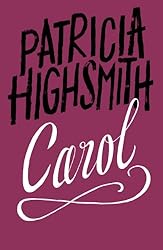
Carol by Patricia Highsmith VS Odd Girl Out by Ann Bannon


Somehow I have found myself reading two lesbian novels written in the ‘50s one after the other. I had both Ann Bannon’s and Patricia Highsmith’s books under my radar for quite some time, but only the news recently come to my attention that a movie based on Carol was coming out soon prompted me to finally read it (or listen to it, rather). After Carol, I craved more lesbian fiction and I turned to Ann Bannon. Both books being published in the same era, only few years apart – Carol in 1952 and Odd Girl Out in 1957, they ask to be compared to each other.
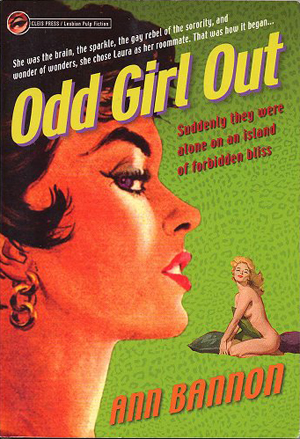

Now, I don’t know how strict the publishers were at the time when they were asked by the Censorship to avoid any positive final outcome of lesbian and gay relationships, but somehow Carol, or the Price of Salt as it was originally named, managed to overcome those limitations and get away with a relatively happy ending. It’s well known for that, unfortunately. I say unfortunately because I have the feeling I would have appreciated the ending more if I hadn’t known that. As it happens, I did, and I wish it had been happier. But I had little or no knowledge of how the lesbian fiction of the time was, so of course I didn’t have any terms of comparison. Now I have read another one, Odd Girl Out, and compared to it, it seems like a celebration of all things lesbians, of EVERLASTING and TRUE LESBIAN LOVE. It’s even more surprising, knowing that it was published five years earlier than Ann Bannon’s novel. Could it be that its New York setting made it more permissive or more realistically open to different kinds of love than the conservative microcosm of a Midwestern University? Perhaps, but for whatever reason the two books are strikingly different.


Carol is the story of Therese, a 19-year-old stage designer who, at the beginning of the story, is working in a department store for some extra cash at Christmas, and of Carol, a charming woman in her '30s, about to get a divorce. One day Carol comes to Therese's desk to buy a doll for her daughter and Therese quite literally falls in love with her at first sight. She sends her a Christmas card later and Carol replies by inviting her out for coffee. They start an intimate friendship that later on becomes a love affair. There are complications though, as Carol is going through a divorce and the husband is not ready to let go of their daughter’s custody without a fight.

I enjoyed the writing in Carol. It’s quite beautiful and perceptive. The story is as much about Therese’s complete entrancement with Carol as about Therese’s struggle to find her place in life. To find meaning and fulfilment.
I loved the age gap between the two women and I was fascinated by Carol as much as Therese was. Their relationship isn’t one between equals, though. Carol has way too much control over Therese and never seems to reciprocate the younger woman’s feelings in equal measure. For a while it seems Therese is merely a distraction, a way of taking her mind away from her bigger problems in her life. She’s guarded and cold, always keeping Therese on the edge, never fully letting her in and embracing their romance without reservations. This was the only reason that kept me from falling in love with the book completely. I wanted to see more passion from Carol. I know it was there, she just never let herself show it. I understand her pain and fear of losing her daughter were clouding her ability to show love to Therese, but it made me weary of her, and I never fully trusted her. I didn’t trust her even if I knew how it was going to end. 

This said I am really excited that Cate Blanchett is playing Carol. She seems perfect for the role and I couldn’t imagine anyone else playing her.

After Carol, I was craving a true, passionate lesbian romance and I turned to Ann Bannon. Ha! Little did I know.

At first, I thought the budding romance between young and timid Laura and confident and charming Beth was really cute. I loved how protective Beth was of Laura, how despite her teasing, she never means to hurt her. This, however, proves to be her biggest mistake. I never fully warmed to Laura, until the end, when she surprised me, by showing how much she has grown and how much Beth had underestimated her. I found Laura throughout the book to be annoying and spoiled and whiney. I liked Beth at first, I liked how sure of herself and fearless she was. But as soon as she starts falling in love with a guy, I started losing interest. This was supposed to be my steamy, forbidden, lesbian story! What was happening? Alas, heteronormative was happening. Of course, Beth hadn’t met the right guy yet. And of course, Charley was finally that right guy. Who tells her that lesbian relationship can only happen during childhood, that women should like men only, otherwise they are refusing to grow up and to accept reality.

Thankfully Laura is having none of this shit. Even though it takes a while for her to stop acting all confused and clueless about who she is. I liked the ending, which is supposedly a bad one for their romance? Except it’s the best ending that I could have asked for. I couldn’t wait for Laura to get rid of Beth. It took her way too long. That ending gives me hope. And it’s the reason why I will keep reading these books, and hopefully, finally, get my steamy, forbidden, lesbian story.

Compared to Carol, there was a lot more talk about how homosexuality is wrong and illegal and how it can stop a woman from growing up. Surprisingly in Carol, Therese never questions herself about her love for Carol. It just happens and she accepts it completely. She might have posed for a moment to consider how society viewed her sexual inclinations, but she never lets them affect her. The only time the issue is raised is by a man, who is speaking out of hurt and disappointment. It’s never raised after that. It’s not Carol and Therese’s concern to judge or hate themselves for what they’re doing, which is beautiful. Of course, there are consequences to pay, because they are still lesbians in the ‘50s, but I loved how self-hate or denial was never even a thing for them.
In Odd Girl Out, the issue is raised again and again. Mostly by men, but also by Beth, who does really think that lesbianism is a thing to outgrow, and by her friend Emmy, who doesn’t even begin to comprehend how a woman could find another woman attractive. ‘What’s there to want?’ she says. But as much as she doesn’t understand it, she doesn’t judge it either.  The only one who isn’t affected by this is Laura, and that’s her redeeming quality. Like Therese, she never questions her feelings, never doubts them and never betrays them. Which is something to admire in both of them.

I probably will never find the passionate, Tipping-the-Velvet kind of romance I want from these books, but I will keep reading them. I love the vintage setting, I love to read lesbian stories that were genuinely written at that time, and I love to see how much they dared, and how much they could get away with.


And hopefully Carol the movie will be as satisfying as that trailer promises to be.

Tuesday, 15 September 2015

Lair of Dreams - Libba Bray


I’m so glad this was a New York Times # 1 best seller. Mostly because it’s the sequel of one of my favourite books I’ve listened this year. But also because there is so much diversity, it might explode.

See what I did there
The Diviners’ strength was in its tight plot, its charming characters and its 1920s New York allures. The sequel, Lair of Dreams, seems to have a less tight plot at first, because there is so much going on, and not all is part of the main story. There is an underlining arc that continues from the first book which doesn’t resolve here, so I’m expecting at least a third instalment for that to unravel. And if at first I thought I wasn’t going to love it as much as the Diviners, I ended up doing just so.

I loved how the book’s attention stretched onto other characters. Evie is not the main ‘diviner’ anymore. I absolutely adore Evie and loved every second we spend with her, but I was happy to get to know Henry more. I didn’t realise how much of a charmer he really is. I adore him too. And I love Ling. I looooveeeee her. She’s snarky and smart and she’s into science and stuff. She’s also half Chinese, half Irish. And she also has infantile paralysis so she’s disabled. And she’s also kinda gay.


 Oh, and she’s also a dream-walker, like Henry, so she’s one of the gang now.  


Then there’s Theta, who is still super cool and beautiful and in love with Memphis, but I wish the two of them had more screen-time. Or at least I wish Theta had. I love her and she needs a better storyline. Anyway, her relationship with Memphis is another tick on the diversity box as Memphis is black and in the ‘20s it was still a big no-no.

Then there’s Henry who is totally gay for Louis, who is a boy, so let’s tick another box. Their romance is so painful and real and so heart-breaking and just


And then there’s the underlining theme of the constant racism our characters have to face on a daily basis. How the Chinese and the Irish and the Italians are made to feel foreign in their own homes. There are mentions of the KKK and the Chinese Exclusion Act. Of the hardships their parents and grandparents had to face to arrive to America, only to be faced with hatred and abuse when they arrived there.  

It deals with politics, eugenics, science. With homophobia and xenophobia and classism. But also with love and loss and shattered dreams and pain.

I love that there’s a diviner gang now. I hope they gang up more in the third book. And I don’t even care that it’s completely unlikely that so many diviners happen to be friends with one another. I choose to believe that it’s their powers that brought them together (which it might well be, who knows). Because at this stage we have Evie, Sam, Henry, Ling, Memphis and Theta, all divining away. Even Memphis’ brother. The only one who hasn’t been outed yet is Theta, but I figure it’s going to happen soon enough. (relatively speaking, we might have to wait another three years. Oh God.) Then there’s Jericho who is also kinda superhuman in his own way. The only poor normal sap is Mabel. I don’t know what to feel about her, she doesn’t have much to do, aside from mooning over Jericho, who still moons over Evie, who moons over both Jericho and Sam.

Which brings me to one of my main point of interest in the book. The Shipping.


There has been some major shipping going on, of the boy/girl kind. MAJOR. I mean, I already shipped Evie and Sam in the first book. Instinctively, I felt they had a lot of chemistry and I did not see the Jericho factor at all. There was no build-up to it. But this time, oh boy. Libba used an all-time favourite trope of mine, the fake-couple. In this case fake-engaged, instead of fake-married, but it works just as well. Top it up with tons of chemistry and brilliant banter and secret flips of the stomachs that MUSTN’T happen but do happen because the heart can’t listen to reason, and there you have it, perfect shipping material. Not to mention the fact that they’re made for each other. I just wish we didn’t have to deal with a love triangle. I fucking hate love triangles. I hope Jericho really falls for Mabel and that’ll be the end of it. This sequel definitely seemed to steer in this direction anyway, although it threw in some good ol’ angst between Sam and Evie for good measure. So we’re left with oozes of UST and Angst but no resolution. Which is fair enough, as it’s only the second book. But please let them be endgame. I ship them so hard, you guys.


I haven’t even mentioned the main plot yet. And the main villain. Which turns out to be really spooky. Not as flat out scary as Naughty John. This one was more layered with emotions, but still creepy as hell. There really was a terrible death. So, so terrible. I can’t even think about it, it’s the true stuff of nightmares. And then there are more terrible deaths, and people disappearing in the tunnels, and there are more ghosts and sleeping sickness and creepy dreams… I didn’t realise how scary the story was until I listened to it at night. I realised I had skipped some parts so I went back to it, so happy to have another hour or so still left. But I made the mistake of going to bed first. Do not make the same mistake. I started being scared of the dark, of creepy veiled women with a music box lurking in the shadows, telling me to dream with them with their demonic voice. Of smiling ghosts with sharp teeth running after me.

Just don’t read or listen to this after dark. You’ll be fine.

Now I only need to sit tight and wait for the next book. I need to know about Project Buffalo, about the mysterious men stalking the museum, about Will and Sister Walker’s secret mission, about Sam’s mother, about those cards in that office and what they mean, about Blind fucking Bill and when he’s going to be found out and stopped, about the man in the Stove Pipe Hat and about the eye with the lightning strike over it.

And I need to know if Sam and Evie get their shit together.

And I also want a new boyfriend for Henry and a girlfriend for Ling. 

Monday, 2 February 2015

The Diviners by Libba Bray - Narrated by January Lavoy

Another audiobook hit. I don’t know what made me pick this one out the rest. It has never even been in my wish list. I had read a couple of Libba Bray’s books before, which I was moderately enjoying until it was revealed that my favourite character was actually the big villain of the piece, and that put me off reading the rest of the series.
 The Diviners, on the other hand, was a completely different matter. I could not stop listening.
It ticked so many personal boxes: New York, historical setting , female lead (although it took me a while to warm up to her), intriguing side stories and characters, supernatural & superpowers… Because of the main characters’ dynamics and the fact that it has a supernatural /horror theme, it had a very Buffy-esque feel to it, which only added to my appreciation. I am not a sucker for murder mysteries in general, but this one wasn’t a true mystery. We know who did it, it’s our characters who need to find out, so it’s more of a murder investigation, with supernatural twists. We like.
Evie O’Neill, the MC, was hardly a love at first listen for me. She seemed exactly the kind of girl I’d avoid as a teenager. Attention-seeker, party-goer, that kind. But as the story goes along, I learned to like her for her humour and sharp wit, and later even admire her for her courage. I did NOT approve though, of her choices in love interests. Not because they’re wrong (although, *romantic spoiler ahead* it was indeed a shitty thing to do to your best friend) but because I was shipping her hard with another person. I still have hopes for the next books though.
 And then there’s the narrator, January Lavoy. She was brilliant. Her tone was pleasant, her pace perfect, she did all the voices differently, so you always knew who was speaking (OK, some of the male voices sounded the same, but you’d still know they were male at least), and the scary voices were REALLY scary. It would have been a perfect R.I.P. challenge read.
The sequel can’t come out soon enough.

Friday, 30 January 2015

Every Day by David Levithan - Narrated by Alex McKenna

I was hooked from the first minute. It was the combination of an intriguing premise and the pleasant sound of Alex McKenna’s voice. She has this low, husky tone with a gentle and musical accent, which was very easy and pleasant to follow. Sometimes people tell me the reason they wouldn’t be into audiobooks is because they would find it hard to follow, that their attention would wander. I thought so too, but I found that as long as the reader doesn’t go too fast (and that I like the voice, of course) that problem doesn’t occur. Needless to say, I never had that problem with Alex.
The story follows A as he/she tries to lead a normal life when everything about her/his/its (hir?) life isn’t. A changes bodies every day, never having owned their own (yeah, I’ll go with their, although I thought of A as 'she' while listening). I find this concept mindboggling. How does one define themselves without not just a body, but a life and an identity that never change. A family, a history that belongs to you. Without friends that know the real you, not the person you’re inhabiting. None of this is part of A’s life. A has to adjust to their body and life changing every day without having any control over it. It sounds like the stuff of nightmare, but A has decided, now at the age of 16, to accept it and go with the flow, to live in the present and not worry about it too much. Until A meets Rhiannon and falls in love with her.
 Now, I can’t tell much more without giving it away, but let me tell you it kept me hooked till the very end. It’s not a perfect book by any means, but I loved it all the same. It explores many issues: body image, identity, morality, sexuality, love. Especially love. We like to say that it’s what’s inside that matters. That the physical part is not as important as one’s personality, one’s “soul”. But do we really mean it? How much of our love or infatuation is based on appearances, on the physical aspect of it? I am not ashamed to say that for me the physical side is very important. I fall in love with the person as a whole, I love their personality and mind as much as their bodies. But with A you can only get one immutable aspect of the package. The rest is up to fate. Loving A would mean loving a ‘conscience’ but not a ‘person’, at least not in the way we’re used to. For this reason, and for many others (lack of lasting relationships, including the love of one’s family, for one) my heart ached for A. It still does, if I think about it. I read some reviews where people were outraged by A’s behaviour. They resented them the way they “used” their bodies, for their own purposes. I would agree with this view if A had any choice in the matter. If A had a body to return to and used their powers to do as they please, while hijacking other people’s lives, but that’s not the case. A has NO body, NO life of their own. What are they supposed to do, surrender to their fate and pretend to be someone else their whole life? Be completely selfless and devote their life to be as invisible and innocuous as possible? Just passing through, pretending they don’t exist? It seems cruel, to ask this of someone’s life. It’s easy to accuse but what would you do, especially if you fell in love? And remember, A is only 16.
 In any case, whether you'd love the book or not, it'd still be worth reading (or listening!), even if just to boggle your mind for a while.

Thursday, 29 January 2015

The irresistible lure of audiobooks


I never would have thought I’d say this but I have totally fallen into the alluring and comforting arms of audiobooks. Not that I have ever had anything against audiobooks before. I just always thought they weren’t for me. I had tried one, years ago, and didn’t particularly like that experience, so I thought that had sorted the matter. But I had underestimated the love I had always had for listening to stories read aloud to me. I remember my Middle School English teacher reading to us from Momo by Michael Ende, and that was my favourite hour of the whole week. So I shouldn’t be surprised audiobooks would be such a pleasure. Obviously that very first attempt was a poor one. Either I didn’t like the narrator’s voice or I wasn’t too interested in the book. Anyway, last year I came across, completely by chance, a copy of The Order of the Phoenix read by Stephen Fry. I gave it a try and I was instantly hooked. I went on listening to 4 more Harry Potter books, but even after that I was still a little hesitant. “It’s Harry Potter” I told myself. “Easy to listen to. And Stephen Fry as well did an amazing job, it must be a fluke.” Still, I made a list of possible audiobooks for the future (as I do) and left it at that. Until recently, when I remembered how I love listening to stuff read to me and gave it another try.
Well, let me tell you, it was no fluke. I mean, there's so little effort involved. One can listen to audiobooks with eyes closed,  in the dark,  in the car (and not get car sick), while cycling or cooking.,,
  Although I must confess my favourite way of listening is while lying in bed, cuddled to my phone, listening to the invisible person with the soothing voice telling me goodnight stories.
Recently I have been introduced to the wonders of Audible and oh boy do I love it. You can listen to all the samples and decide whether you like that voice or not, you can a free one to start with, even if that one if like 60$ or something and after that 15$  a month for one seems very cheap compared to most audiobooks' prices. I have already placed 156 items on my wishlist (and then discovered that so many of these aren't available here - * sad face*) and I haven't even finished yet. 

All this to tell you that my first audiobooks review is coming up shortly :)

Wednesday, 31 December 2014

Books read in 2014

  • 1) Fanfiction. Lots and lots of SG-1 Sam/Jack fics.
  • 2) National Geographic magazines, every month since April
  • 3) Listened to Stephen Fry reading Harry Potter 5,6 7, 1 and 2 in this order.
  • 4) The Amazing Adventures of Kavalier and Clay by Michael Chabon
  • 5) The Paying Guests by Sarah Waters
  • 6) The strange and beautiful sorrows of Ava Lavender by Leslye Walton
  • 7) Attachments by Rainbow Rowell
  • 8) Black Maria by Diana Wynne Jones
  • 9) Miss Peregrine's Home for Peculiar Children by Ransom Riggs
  • 10) Hollow City by Ransom Riggs
  • 11) Castle Waiting vol.1 by Linda Medley
     Yep. That's it I'm afraid.

Thursday, 16 October 2014

Miss Peregrine's Home for Peculiar Children & Hollow Ciity by Ransom Riggs

I did not expect to like this book (and its sequel) as much as I did. Somehow I had it in my head that it was all about the photographs and that it was a story about freaks, and I'm not into freak shows and all that, they give me the heebeegeebees. But I figure it would have been a perfect read for R.I.P. so there we are. As it turns out, it wasn't just about the photographs and the "freaks" were adorable and I loved them all, individually and as a group.
The first book is, I dare say, perfect. It builts up nicely at the start, then it throws you into another world and you get to know the characters and why they are there, and there's even a sprinkle of romance, which is always good, and then there's Miss Peregrine and she's so much like McGonagall I wanted to squee. My favourite of the children had to be Bronwyn. She is lovely and motherly and cool. But it's true that I loved all of them and I was so afraid some of them were going to die.
I need to express my excitement now so if you don't want any spoilers skip the next paragraph:

There was time travel (!) and time loops (!) and that's already two of my favourite tropes in the history of tropes.

There were some things I wasn't too clear about, like for example, how come the children kept feeling like children after all those years. But I just went with it.

End of spoiler

 And when it was over I was like hell no, I'm not going to start another book, Imma download the sequel right now. And I did. I'm starting to love this ebook business.

And the sequel was also great fun, because it had all the characters I loved and there was adventure
and ass-kicking and new photographs (although these were less believable, especially as they were meant to be taken when it would have been impossible for them to take photos, or at least very unlikely), some more romance and I love how Emma kept being the leader of the group, because I love Emma. And the animals were cool and the enemies were scary and I really just wanted them to have Miss Peregrine back, but I had a nudging feeling that it could all go so very wrong. And then it does and I was like shiiiiiiit but also damn they should have thought of that possibility at least and now they're kinda screwed, except that the ending gave some sort of hope, even though they're still pretty screwed.

Now I need the third. Now, like.